Latest Post


Quality Management Courses



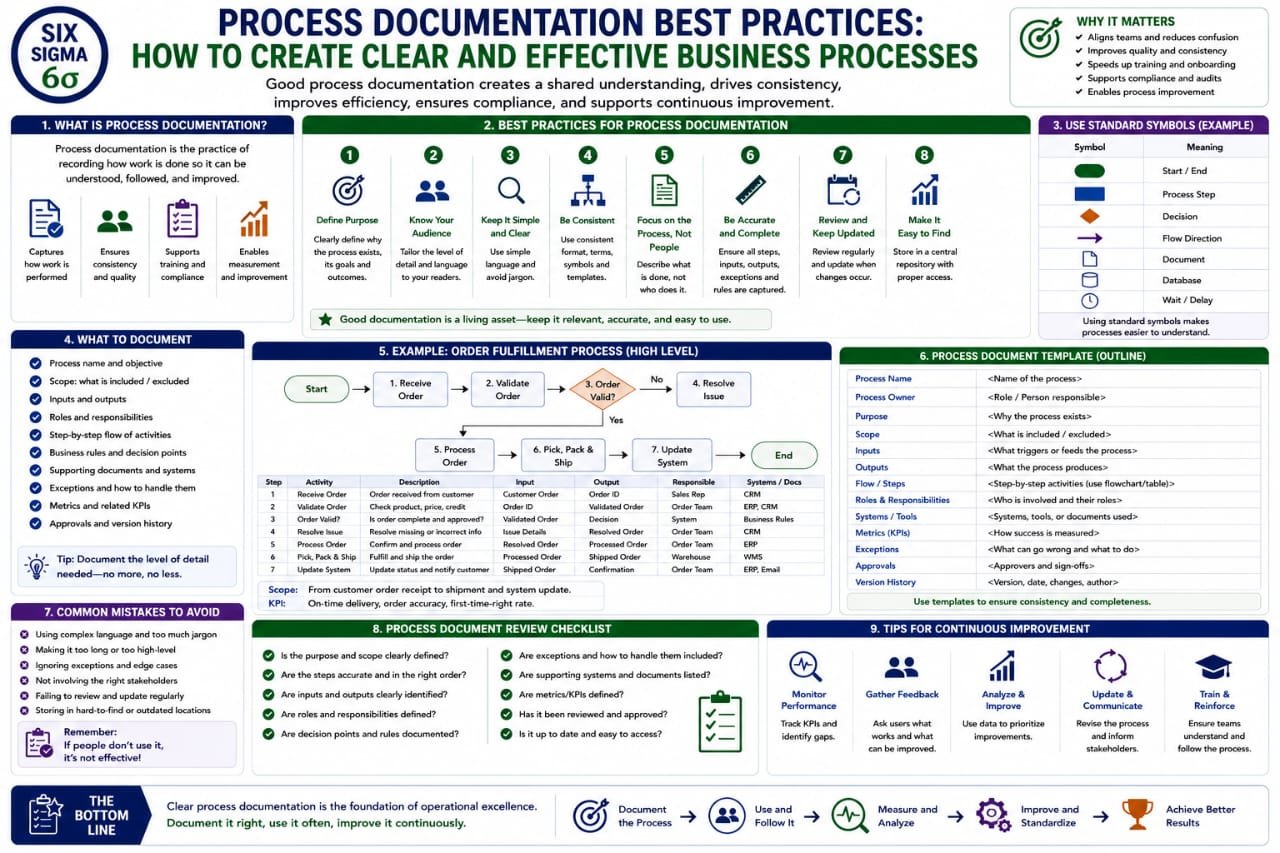

In today's fast-paced business environment, having clear and effective business processes is crucial for success. Process documentation serves as the backbone of any organization, ensuring that every team member understands their roles and responsibilities. In this blog, we will explore the best practices for process documentation, focusing on how to create clear and effective business processes.
What is Process Documentation?
Process documentation refers to the practice of capturing the details of a business process in a structured format. This documentation provides a clear guideline for employees, streamlining operations and ultimately improving productivity. It can include various types of documents, such as SOP documentation (Standard Operating Procedures), flowcharts, and checklists, to name a few.
Why is Process Documentation Important?
Understanding the significance of business process documentation is essential for any organization. Here are some key benefits:
Best Practices for Process Documentation
1. Identify the Purpose of Documentation
Before diving into process mapping and documentation, it's crucial to identify the purpose. What do you want to achieve with the documentation? Are you aiming to improve efficiency, ensure compliance, or provide training materials? Clearly defining the purpose will guide the entire documentation process.
2. Involve Stakeholders
Engaging stakeholders from various departments ensures that the documentation is comprehensive and accurate. Different perspectives can highlight potential issues and opportunities for improvement that you might not have considered. Conduct workshops or interviews to gather input from those who actively participate in the processes.
3. Use Clear and Simple Language
It’s vital to use language that is easy to understand. Avoid jargon and technical terms that may confuse employees. Aim for clarity and simplicity, ensuring that anyone can follow the documented process without additional explanations.
4. Choose the Right Process Documentation Methods
There are various process documentation methods available. Selecting the right one depends on your organization’s needs and the complexity of the processes. Some popular methods include:
5. Create a Standard Format
Consistency is key in process documentation. Create a standard template for all documents to maintain uniformity. This includes headings, subheadings, fonts, and layout. A standard format makes it easy for employees to navigate through the documentation.
6. Regularly Review and Update Documentation
Business processes are not static; they evolve over time. Regularly reviewing and updating your business process documentation ensures that it remains relevant and effective. Set a schedule for periodic reviews and make it part of your organization's culture to keep documentation up-to-date.
7. Leverage Technology
Utilizing technology can significantly enhance your process documentation efforts. There are various tools available that facilitate process mapping and documentation, making it easier to create, share, and update documents. Consider using project management software, document management systems, or specialized process mapping tools to streamline your documentation process.
Common Challenges in Process Documentation
While documenting processes is essential, it comes with its challenges. Here are some common hurdles organizations face:
FAQs
What is the difference between process documentation and SOP documentation?
Process documentation is a broad term that encompasses all aspects of documenting business processes. SOP documentation refers specifically to Standard Operating Procedures, which are a subset of process documentation that provides detailed instructions on how to perform specific tasks.
How often should process documentation be updated?
It’s recommended to review process documentation at least once a year or more frequently if there are significant changes in the processes or business environment.
Can process documentation improve team collaboration?
Yes, clear and effective process documentation enhances team collaboration by ensuring everyone is on the same page regarding their roles and responsibilities. It reduces misunderstandings and fosters better communication.
Conclusion
Creating effective business process documentation is vital for any organization looking to improve efficiency, consistency, and compliance. By following these process documentation best practices, you can develop clear and actionable documentation that serves as a valuable resource for your team. Remember, the key is to keep it simple, involve stakeholders, and regularly update your documentation.
Call to Action
Ready to streamline your business processes? Start implementing these process documentation methods today! If you need assistance or guidance, feel free to reach out to us for expert help in business process management. Let’s make your processes clearer and more effective together!