
In today's competitive job market, a polished resume is essential for quality assurance (QA) professionals looking to land their dream job. Whether you're a seasoned quality engineer or a budding quality analyst, understanding how to present your skills, experience, and certifications effectively can make all the difference. In this guide, we will delve into the crucial elements of a quality assurance resume, including the skills you should highlight, how to format your experience, and the certifications that can enhance your profile.
Understanding the Importance of a Strong QA Resume
Your QA resume serves as your first point of contact with potential employers. It is your opportunity to showcase your qualifications and make a lasting impression. A well-crafted quality assurance resume not only highlights your technical expertise but also reflects your ability to think critically and solve problems—two key aspects of QA roles.
Essential Skills to Include on Your Quality Assurance Resume
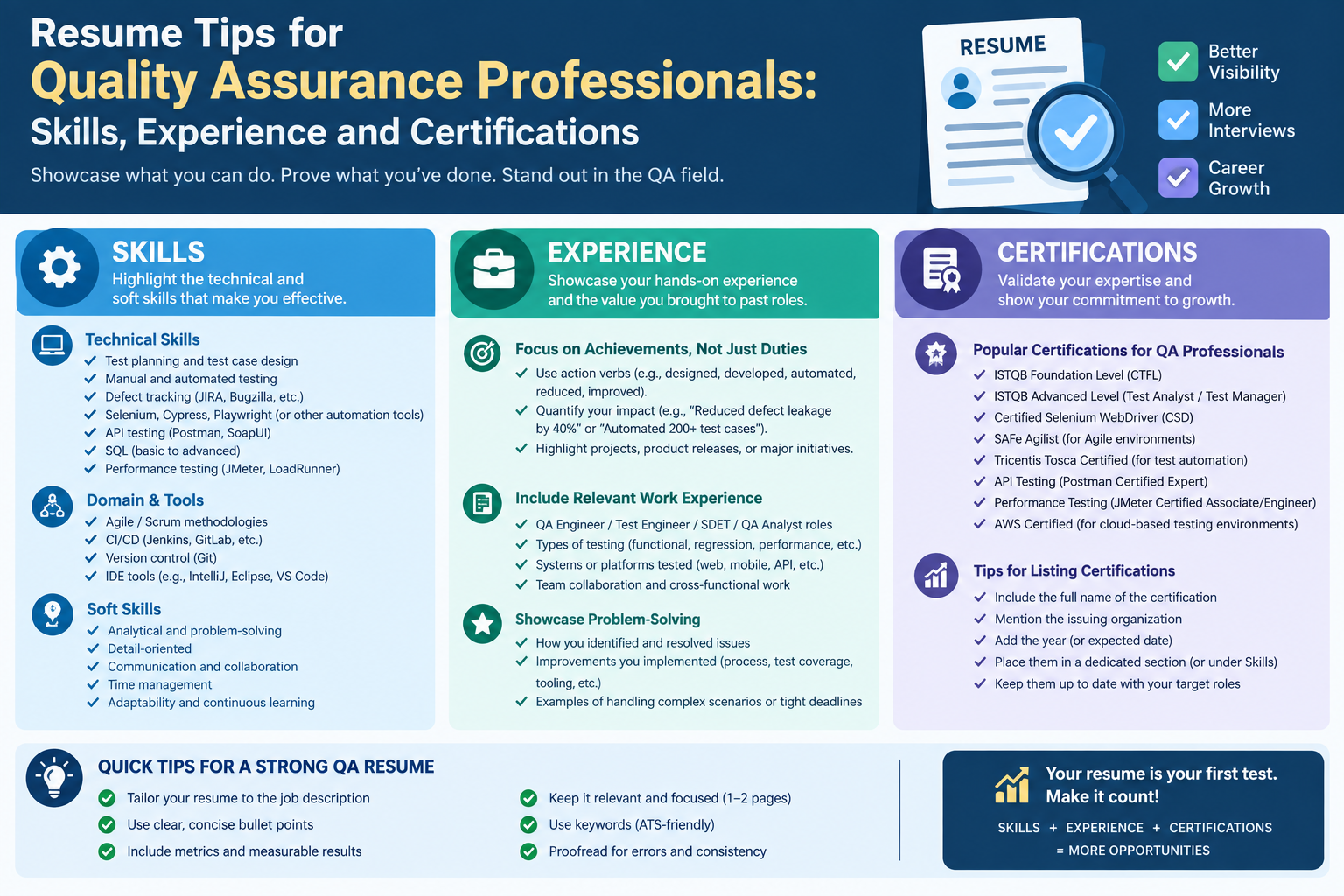
To stand out as a quality assurance professional, your resume must reflect a variety of skills that demonstrate your capability in ensuring product quality. Below are some vital QA skills for your resume:
1. Testing Methodologies
Familiarity with different testing methodologies like Agile, Waterfall, and V-Model is crucial. Highlight your experience with these methodologies to show your adaptability to various project environments.
2. Automation Skills
Automation is becoming increasingly important in quality assurance. If you have experience with automation tools such as Selenium, QTP, or TestComplete, make sure to include this in your quality assurance resume. Specify the tools and frameworks you’ve used, as this can set you apart from other candidates.
3. Programming Languages
Proficiency in programming languages such as Java, Python, or C# is a plus. Mention any coding experience that relates to QA, especially if you’ve written test scripts or automated tests.
4. Analytical Skills
Employers seek QA professionals who can analyze and troubleshoot problems effectively. Showcase your analytical skills by providing examples of how you identified issues and contributed to their resolution.
5. Communication Skills
Strong communication skills are vital in QA roles, where you need to collaborate with developers, project managers, and other stakeholders. Highlight your ability to convey complex information clearly and concisely.
Structuring Your Quality Assurance Resume Format
Having the right quality assurance resume format is essential for clarity and readability. Here’s a recommended structure:
1. Contact Information
Start with your name, phone number, email address, and LinkedIn profile. Ensure your email is professional and up-to-date.
2. Professional Summary
Write a brief summary (2-3 sentences) that encapsulates your experience, skills, and what you bring to the table as a QA professional. Tailor this summary for each job application to reflect the specific requirements of the role.
3. Skills Section
List your core QA skills, including both technical and soft skills. Use bullet points for easy reading and to draw attention to your qualifications.
4. Work Experience
Detail your work history in reverse chronological order. For each position, include:
Quantify your accomplishments wherever possible. For example, “Reduced defect rates by 30% through improved testing strategies.”
5. Certifications
Include any relevant certifications such as ISTQB, CSTE, or Six Sigma. Place this section toward the end of your resume unless your certifications are a strong selling point.
6. Education
List your educational qualifications, including your degree, institution, and graduation year. If you have relevant coursework, consider including that as well.
Certifications That Enhance Your Quality Management Resume
Certifications can greatly enhance your credibility as a quality assurance professional. Here are some highly regarded certifications to consider:
1. ISTQB (International Software Testing Qualifications Board)
The ISTQB certification is recognized internationally and demonstrates your understanding of software testing principles and methodologies.
2. CSTE (Certified Software Tester)
This certification validates your skills in software testing and quality assurance, showing employers that you have a thorough understanding of testing processes.
3. Six Sigma Certification
Six Sigma methodologies focus on process improvement and defect reduction, making this certification a valuable asset for QA professionals.
Tips for Tailoring Your QA Resume for the Indian Job Market
When applying for QA positions in India, consider the following tips to tailor your resume:
1. Use Keywords from Job Descriptions
Many companies use Applicant Tracking Systems (ATS) to screen resumes. Incorporate relevant keywords from the job description, such as “quality assurance,” “testing,” and specific tools mentioned.
2. Focus on Local Industry Standards
Understand the local industry requirements and standards in India. Highlight experience with tools and methodologies that are popular in the Indian market.
3. Keep It Concise
Employers typically prefer resumes that are 1-2 pages long. Ensure that all information is relevant and presented clearly.
FAQs About QA Resumes
1. What is the ideal length for a quality assurance resume?
The ideal length for a QA resume is between 1 to 2 pages. Ensure that the content is concise and relevant to the job you are applying for.
2. Should I include my GPA on my resume?
If you are a recent graduate, you may include your GPA if it's above 3.0. However, if you have significant work experience, it's better to focus on your professional achievements.
3. How do I make my QA resume stand out?
Customize your resume for each job application, use action verbs to describe your experiences, and quantify your achievements to demonstrate your impact.
4. Are soft skills important for a QA resume?
Yes, soft skills like communication, teamwork, and problem-solving are crucial for QA roles. Make sure to highlight these skills in your resume.
Conclusion
Crafting a compelling quality assurance resume is vital for securing your desired position in the QA field. By focusing on your skills, structuring your resume effectively, and obtaining relevant certifications, you can set yourself apart from other candidates. Remember to tailor your resume for each job application and highlight your unique experiences. With these tips in mind, you'll be well on your way to landing that quality assurance role.
If you're ready to take the next step in your career, start updating your quality management resume today! For more personalized assistance, feel free to reach out to us!