Latest Post

Quality Management Courses




In the fiercely competitive landscape of Indian business, understanding the difference between value added activities and non-value added activities can significantly enhance your business efficiency. This blog delves into these concepts, helping you identify lean waste in your operations and optimize your processes.
Understanding Value Added Activities
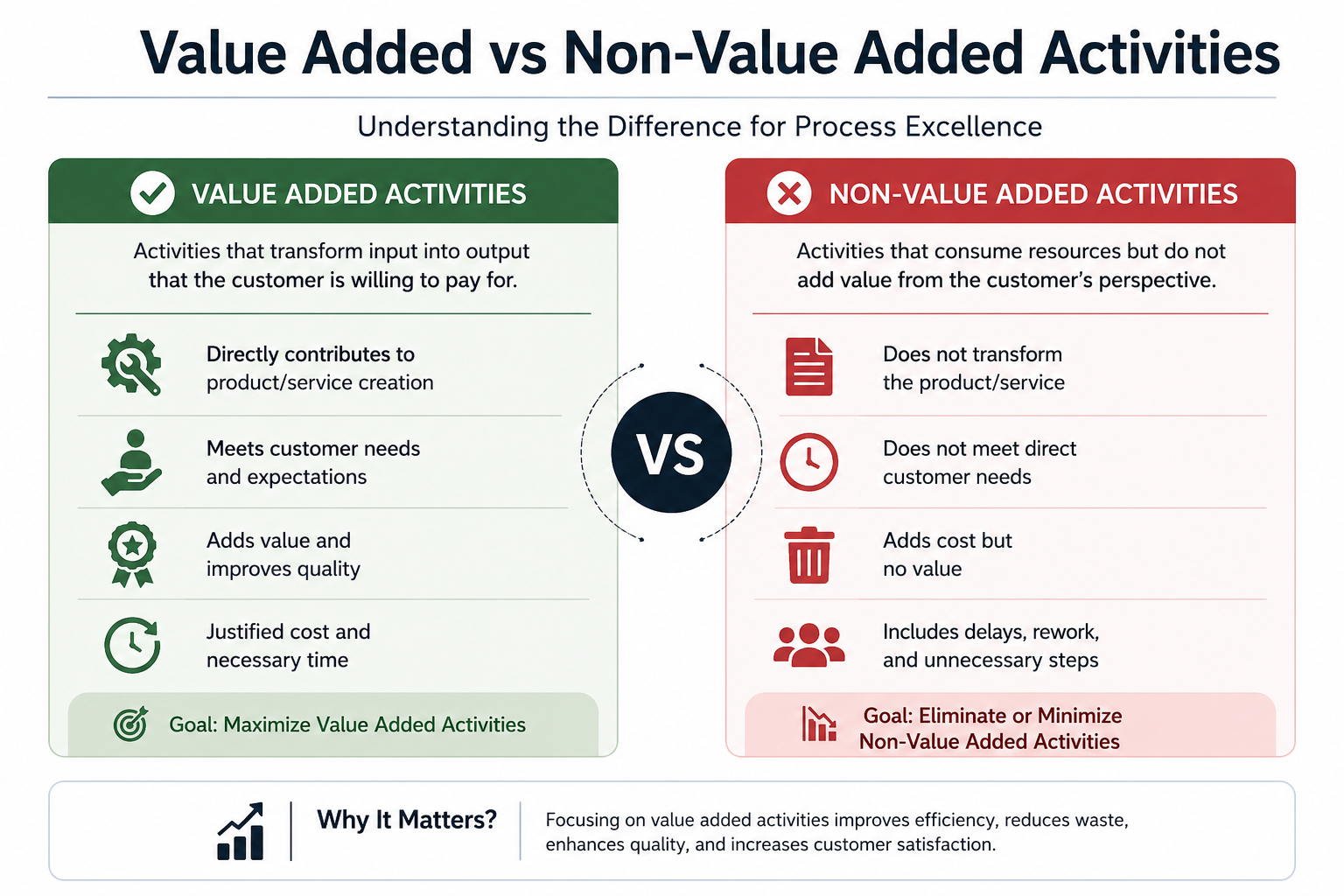
Value added activities are those that contribute directly to the creation of a product or service that meets customer needs. These activities enhance the value of a product in the eyes of the customer, often justifying the price they are willing to pay. In the context of Indian businesses, these can include:
In essence, any activity that transforms raw materials into finished products or enhances customer satisfaction is a value added activity. The focus should always be on maximizing these activities to drive customer satisfaction and loyalty.
The Concept of Non-Value Added Activities
On the flip side, non-value added activities are processes that do not enhance the product or service in any meaningful way. These activities often contribute to lean waste, which can bog down your operations and reduce business efficiency. Common examples include:
Identifying and minimizing non-value added activities is crucial for process optimization. By doing so, businesses can streamline their operations and focus their resources on activities that truly matter.
The Importance of Lean Waste Management
Lean waste refers to any activity that consumes resources but does not add value to the product. In India, where businesses are often operating on tight margins, minimizing lean waste is essential. Here are a few strategies to effectively manage lean waste:
1. Continuous Improvement Culture
Encouraging a culture of continuous improvement within your organization can help identify and eliminate non-value added activities. Engage your employees in brainstorming sessions to pinpoint inefficiencies and develop solutions.
2. Value Stream Mapping
This technique involves visualizing the flow of materials and information through your processes. By mapping out your value streams, you can identify bottlenecks and areas of waste, allowing for targeted improvements.
3. Employee Training
Investing in employee training can significantly enhance business efficiency. Educated employees are better equipped to identify and eliminate wasteful practices, leading to a more streamlined operation.
Process Optimization: The Path to Business Efficiency
Process optimization is fundamental for improving business efficiency. It involves analyzing and improving existing processes to enhance performance. By focusing on value added activities and eliminating non-value added activities, businesses can achieve greater productivity. Here are some steps for effective process optimization:
1. Identify Key Processes
Start by identifying the core processes that are critical to your business success. These processes should align with your strategic goals and customer needs.
2. Analyze Current Performance
Utilize key performance indicators (KPIs) to assess how well your processes are performing. This data will provide insight into areas that require improvement.
3. Implement Changes
Once you have identified areas for improvement, implement changes systematically. Test the changes on a small scale before rolling them out across the organization.
4. Monitor and Adjust
Continuous monitoring is vital to ensure that the changes you implement are effective. Be prepared to make adjustments based on performance data and feedback from employees.
Benefits of Focusing on Value Added Activities
By emphasizing value added activities while minimizing non-value added activities, Indian businesses can reap numerous benefits:
FAQs
1. What are some examples of value added activities in manufacturing?
In manufacturing, value added activities include machining, assembly, quality checks, and packaging that meet customer specifications and standards.
2. How can I identify non-value added activities in my business?
Conduct a thorough analysis of your processes, asking questions like: Does this activity enhance the product? Is it essential for customer satisfaction? Activities that do not meet these criteria may be non-value added.
3. Why is process optimization important for small businesses in India?
Process optimization is crucial for small businesses as it helps reduce costs, improve efficiency, and increase competitiveness in a crowded market.
4. What tools can I use for process optimization?
Tools such as Six Sigma, Lean methodologies, and software like ERP systems can aid in process optimization by providing data and frameworks for improvement.
Conclusion
In conclusion, understanding the distinction between value added and non-value added activities is essential for any Indian business striving for growth and efficiency. By focusing on optimizing processes and eliminating lean waste, organizations can significantly enhance their operational performance. Remember, the goal is to deliver maximum value to your customers while minimizing costs. Start your journey towards improved business efficiency today!
Call to Action: If you’re ready to optimize your business processes and eliminate waste, contact us today for expert consulting services tailored to your needs!