Latest Post


Quality Management Courses



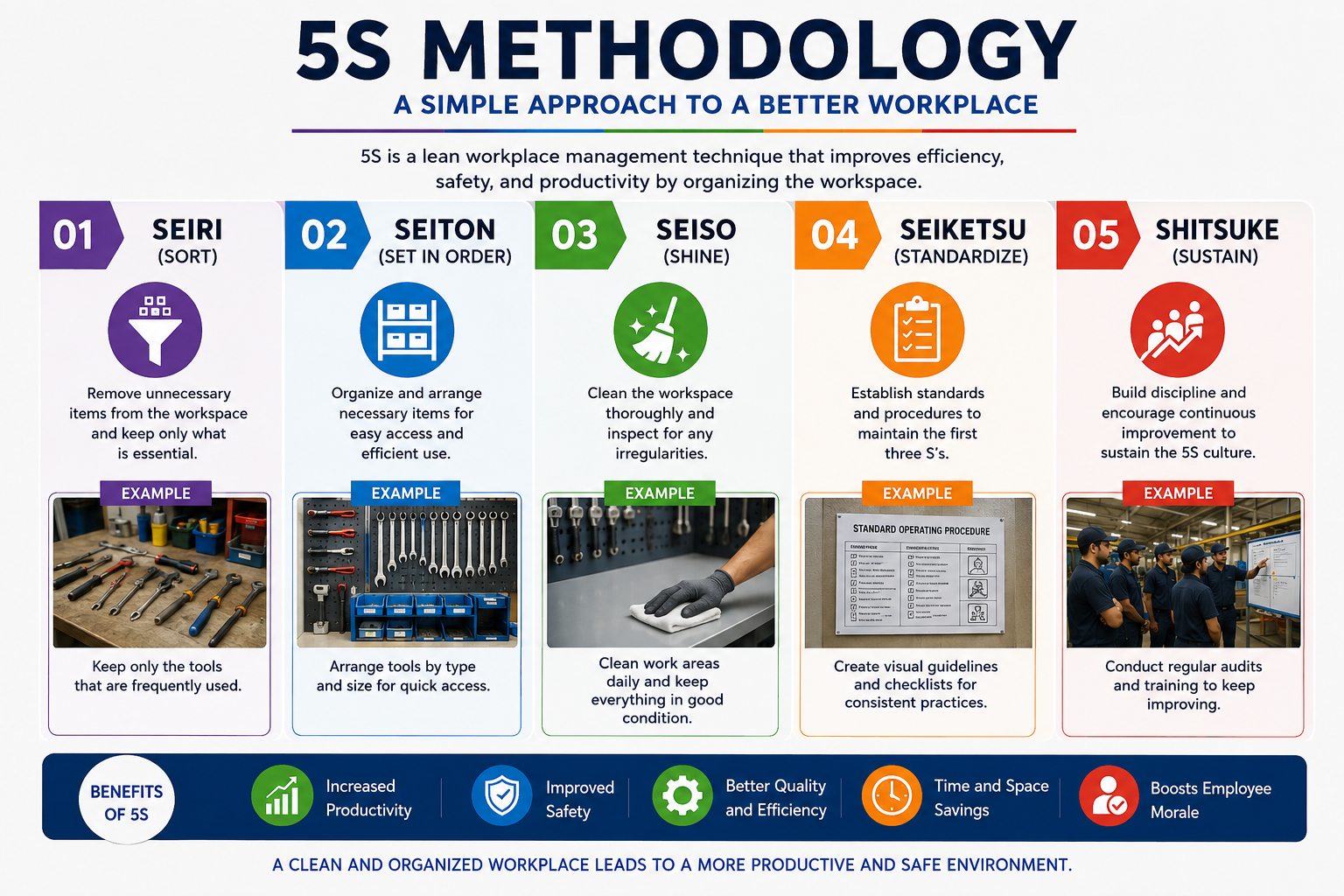

In the fast-paced world of manufacturing and business operations, efficiency and organization are paramount. One of the most effective frameworks for achieving these goals is the 5S methodology. Originating from Japan, this lean manufacturing tool focuses on workplace organization, aiming to improve productivity and create a more efficient work environment. In this blog, we will delve into the 5S lean manufacturing methodology, explore its five pillars, and provide practical examples to illustrate its implementation.
What is the 5S Methodology?
The 5S methodology is a systematic approach to organizing and managing the workplace effectively. The term "5S" stands for five Japanese words that begin with the letter 'S': Seiri, Seiton, Seiso, Seiketsu, and Shitsuke. Translated into English, these terms represent the following:
The Five Pillars of 5S Methodology
1. Seiri (Sort)
The first step in the 5S implementation process is sorting through all items in the workspace. The goal is to distinguish between what is necessary and what is not. This involves:
For instance, in a manufacturing unit, tools that haven't been used in the last six months may be candidates for disposal or relocation. This step not only clears clutter but also allows employees to focus on what truly matters.
2. Seiton (Set in Order)
Once unnecessary items are removed, the next step is to organize the remaining tools and materials. The objective here is to set everything in its rightful place for maximum efficiency. Key actions include:
For example, in a warehouse, frequently used items can be placed at eye level, while less-used items can be stored higher or lower, making retrieval easier and faster.
3. Seiso (Shine)
Cleanliness is a cornerstone of the 5S lean manufacturing methodology. Regular cleaning not only enhances the appearance of the workplace but also promotes safety and efficiency. This step includes:
In an automotive workshop, for instance, regular cleaning of tools and work surfaces can prevent accidents and ensure that equipment remains in good working condition.
4. Seiketsu (Standardize)
After sorting, organizing, and cleaning, it’s time to standardize the processes developed in the previous steps. This involves:
For example, a manufacturing company might develop a standard operating procedure (SOP) for tool storage, ensuring that every employee understands where tools belong and how they should be maintained.
5. Shitsuke (Sustain)
The final pillar of the 5S methodology is all about sustaining the gains made through the previous steps. This involves:
For example, a company might hold weekly meetings to discuss 5S practices, share experiences, and identify areas for improvement, ensuring that the principles of 5S become ingrained in the company culture.
Examples of 5S Implementation in India
Manufacturing Sector
In a manufacturing plant in Pune, the implementation of the 5S methodology resulted in a remarkable 30% increase in productivity within six months. By sorting tools and materials, organizing workstations, and maintaining cleanliness, the company reduced waste and improved operational efficiency.
IT Industry
An IT firm in Bengaluru adopted the 5S principles in their office setup, leading to a more organized workspace. By using digital tools to implement 'Sort' and 'Set in Order,' the firm improved collaboration among teams, reduced downtime, and enhanced overall employee morale.
Healthcare
In a hospital in Chennai, the application of the 5S methodology significantly improved patient care. By organizing medical supplies, maintaining cleanliness, and standardizing procedures, the hospital ensured that healthcare professionals could focus on what truly matters: patient care.
Benefits of 5S Methodology
Implementing the 5S methodology offers numerous benefits, including:
Frequently Asked Questions (FAQs)
What is the primary goal of the 5S methodology?
The primary goal of the 5S methodology is to create an organized, efficient, and safe workplace that enhances productivity and minimizes waste.
Can 5S be applied to non-manufacturing sectors?
Yes, the principles of 5S can be applied across various industries, including healthcare, IT, and office environments, to improve organization and efficiency.
How long does it take to implement the 5S methodology?
The time required for successful implementation varies based on the size of the organization and the complexity of the processes. However, many companies see initial results within a few months.
Is 5S a one-time process?
No, 5S is an ongoing process that requires continuous effort and commitment to sustain improvements and promote a culture of discipline.
Conclusion
The 5S methodology is a powerful tool for workplace organization that can lead to significant improvements in productivity, safety, and employee satisfaction. By applying the five pillars—Sort, Set in Order, Shine, Standardize, and Sustain—organizations can create a culture of continuous improvement and efficiency.
If you’re considering implementing the 5S lean manufacturing methodology in your organization, now is the time to take action. Start small, involve your team, and watch as your workplace transforms into a more organized and efficient environment. For more tips and resources on lean tools and practices, subscribe to our newsletter or contact us today!