
Latest Post





Quality Management Courses



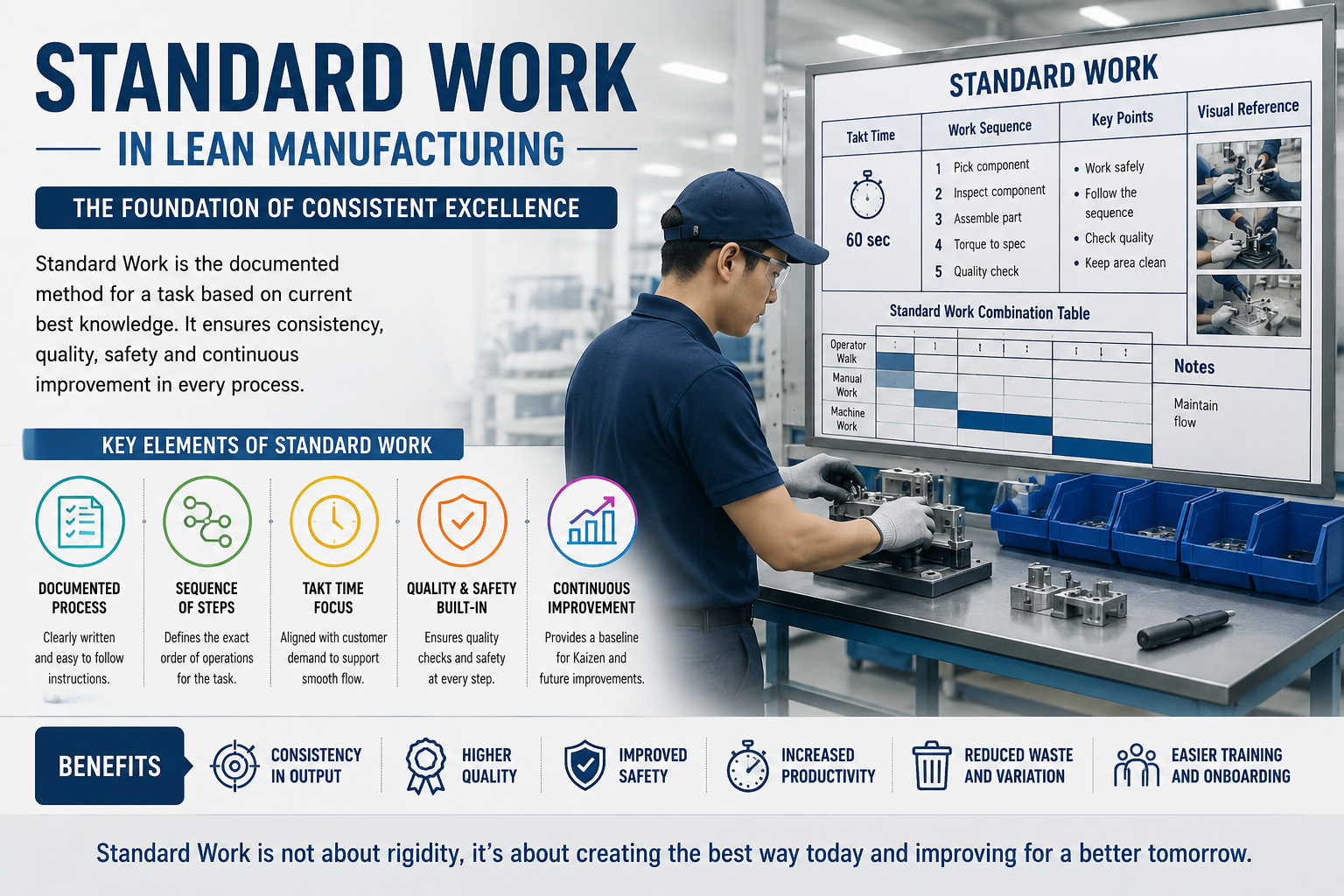

In the fast-paced world of manufacturing, efficiency and quality are paramount. This is where standard work lean practices come into play. Understanding standard work in the context of lean manufacturing standards is essential for companies aiming to optimize their operations and enhance productivity. In this article, we will explore what standard work entails, its importance, and how it integrates with various lean tools to create a more efficient manufacturing environment.
What is Standard Work?
Standard work refers to the detailed, prescribed methods for performing tasks in a consistent manner. It involves defining the best practices for a particular job that can be repeated reliably by any worker. By documenting these practices, organizations can ensure that every employee performs tasks in a standardized way, reducing variability and improving overall quality.
The Importance of Standard Work in Lean Manufacturing
The concept of standard work is foundational to lean manufacturing. Here are some key reasons why standard work is critical:
1. Consistency and Quality Control
Standard work ensures that every worker follows the same procedures, which leads to uniformity in output. This consistency is vital for maintaining quality control. When variations in processes are minimized, defects and errors are significantly reduced.
2. Training and Onboarding
Standard operating procedures (SOPs) serve as an excellent training resource for new employees. By providing clear instructions on how tasks should be performed, new hires can quickly get up to speed, reducing the learning curve and increasing productivity from day one.
3. Continuous Improvement
Standard work is not static; it is a living document that can evolve as processes improve. By regularly reviewing and updating standard work practices, organizations can foster a culture of continuous improvement, ensuring that they remain competitive in the market.
Components of Standard Work
To implement effective standard work, organizations must focus on three key components:
1. Takt Time
Takt time is the available production time divided by customer demand. It helps determine the pace at which products should be made to meet customer needs. By aligning standard work with takt time, manufacturers can ensure they are producing efficiently without overloading their resources.
2. Work Sequence
The work sequence outlines the specific steps required to complete a task. This sequence must be logical and efficient, ensuring that each step flows smoothly into the next. A well-defined work sequence minimizes wasted motion and maximizes productivity.
3. Standard Inventory
Standard inventory refers to the amount of materials needed to perform a task without delays. By clearly defining the standard inventory levels, organizations can avoid stockouts and ensure that production flows uninterrupted.
Implementing Standard Work: A Step-by-Step Guide
Implementing standard work requires careful planning and execution. Here’s a step-by-step guide to help you get started:
Step 1: Identify the Process
Begin by selecting the process that needs standardization. This could be a high-volume task or one that has been causing issues with quality or efficiency.
Step 2: Observe and Document
Observe the current process in action. Take detailed notes on each step, including the time taken and resources used. Document the best practices observed during this phase.
Step 3: Develop Standard Work Instructions
Based on your observations, create standard work instructions that outline the best practices for the task. Ensure that these instructions are clear, concise, and easy to follow.
Step 4: Train Employees
Introduce the new standard work instructions to your team. Provide training sessions to ensure everyone understands the new procedures and the importance of adherence to these standards.
Step 5: Monitor and Adjust
After implementation, monitor the process closely. Gather feedback from employees and look for opportunities to improve the standard work instructions. Adjust as necessary to refine and enhance the process.
Lean Tools to Support Standard Work
Several lean tools can support the implementation and maintenance of standard work:
1. Value Stream Mapping
This tool helps visualize the flow of materials and information throughout the manufacturing process. By identifying bottlenecks and areas of waste, organizations can create more efficient standard work processes.
2. 5S Methodology
The 5S methodology (Sort, Set in order, Shine, Standardize, Sustain) is essential for maintaining an organized and efficient workspace. This organization supports adherence to standard work by ensuring that employees have the right tools and materials readily available.
3. Kaizen Events
Kaizen events are focused improvement sessions that engage employees in identifying and solving problems in their work processes. These events can lead to valuable insights for refining standard work practices.
Challenges in Implementing Standard Work
While standard work is beneficial, organizations may face challenges during implementation:
1. Resistance to Change
Employees may resist standardized procedures due to a preference for their methods. It’s essential to communicate the benefits of standard work and involve employees in the development process to gain their buy-in.
2. Lack of Management Support
Without strong support from management, standard work initiatives may falter. Leadership must be committed to promoting and enforcing standard work practices throughout the organization.
3. Inadequate Training
If employees are not adequately trained on standard work procedures, adherence may be inconsistent. Continuous training and reinforcement are necessary to ensure that everyone understands and follows the standards.
FAQs About Standard Work in Lean Manufacturing
What is the difference between standard work and standard operating procedures?
Standard work focuses on the best practices for performing tasks efficiently, while standard operating procedures (SOPs) provide specific written instructions for completing tasks, which may not always reflect the most efficient methods.
How often should standard work be reviewed?
Standard work should be reviewed regularly, especially when there are changes in processes, technology, or customer demand. A quarterly review is a good practice to ensure that instructions remain relevant.
Can standard work be applied in service industries?
Yes, standard work principles can be applied in service industries by standardizing customer interactions, service delivery processes, and administrative tasks to improve efficiency and consistency.
Conclusion
In conclusion, standard work lean practices are essential for enhancing efficiency, quality, and consistency in manufacturing. By implementing standard work, organizations can create a culture of continuous improvement and ensure that their operations remain competitive in an ever-evolving market. Embracing tools like value stream mapping, 5S, and Kaizen events will further support these efforts.
If you’re looking to implement standard work and lean manufacturing practices in your organization, don’t hesitate to reach out for expert guidance. Together, we can streamline your processes and enhance productivity.
Ready to optimize your manufacturing processes? Contact us today to learn more!