
Latest Post




Quality Management Courses



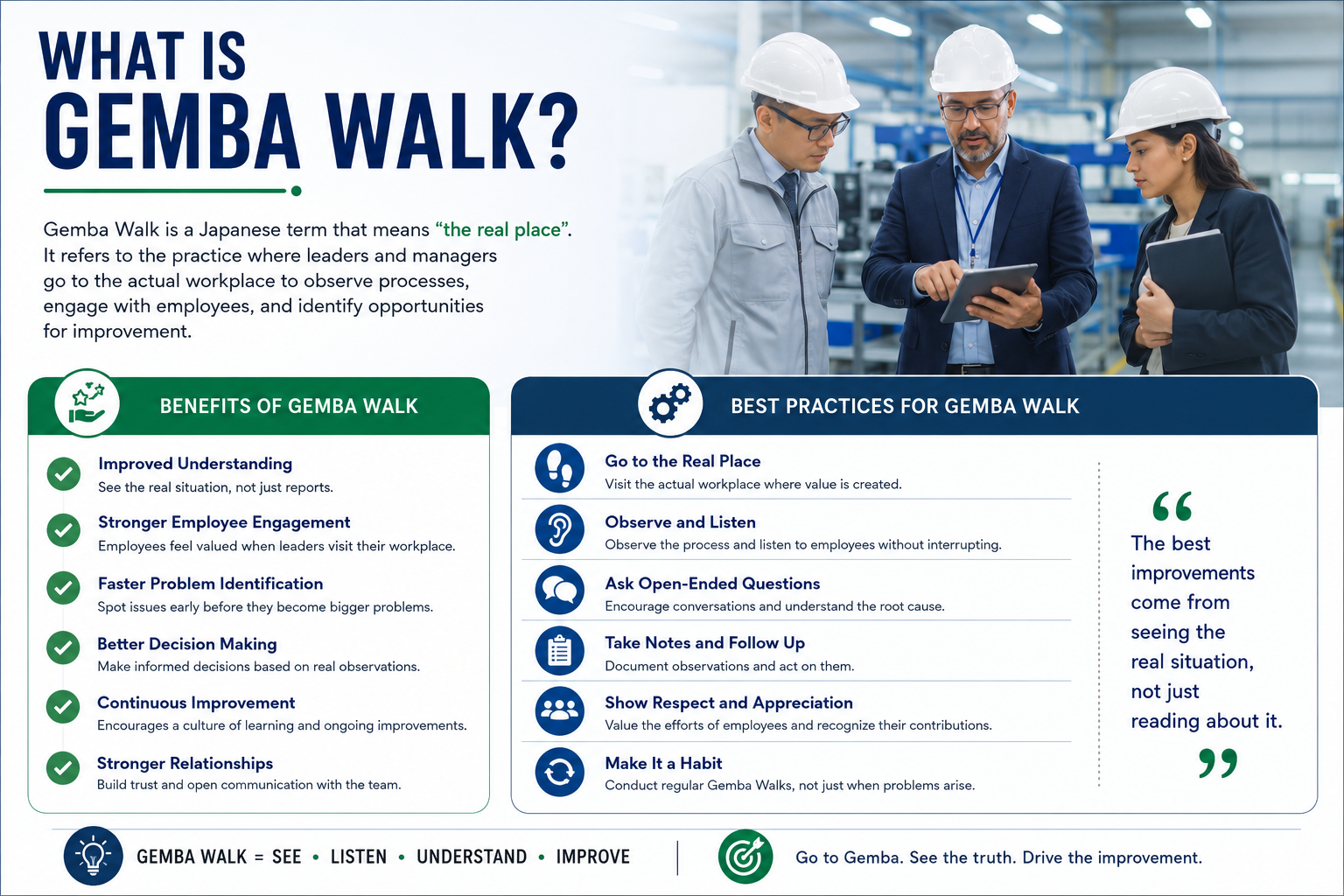

In the world of lean management, the term Gemba Walk has gained significant traction among professionals looking to enhance operational efficiency. But what exactly is a Gemba Walk? In simple terms, it refers to the practice of going to the "real place" where work occurs—be it a factory floor, an office, or any work environment—to observe processes, engage with employees, and identify opportunities for continuous improvement.
The Concept of Gemba Walk
The word "Gemba" comes from Japanese, meaning "the real place." In a business context, it refers to the actual location where value is created. The Gemba Walk is not just about observing; it’s an immersive experience that fosters communication, collaboration, and innovation. In India, where industries are rapidly evolving, implementing Gemba Walks can provide organizations with a competitive edge.
Why Is Gemba Walk Important?
The significance of Gemba Walks in the realm of lean leadership cannot be overstated. Here are some compelling reasons why businesses should embrace this practice:
Benefits of Implementing Gemba Walks
When executed effectively, Gemba Walks can lead to numerous benefits for organizations. Here are some of the key advantages:
1. Improved Process Efficiency
By observing work processes in real-time, leaders can identify bottlenecks and inefficiencies. This hands-on approach allows for quicker resolutions and optimization of workflows.
2. Increased Employee Morale
When leaders actively engage with employees on the shop floor, it fosters a sense of belonging and boosts morale. Employees appreciate when their feedback is valued, leading to a more motivated workforce.
3. Better Problem-Solving
Gemba Walks provide leaders with a clearer understanding of the problems employees face. This clarity enables more effective problem-solving and resource allocation.
4. Cultivating a Culture of Continuous Improvement
Regularly conducting Gemba Walks helps instill a mindset of continuous improvement within the organization. Employees become accustomed to reviewing and refining processes, leading to sustained growth.
5. Enhanced Team Collaboration
Gemba Walks encourage collaboration among teams. When leaders and employees discuss observations together, it fosters a spirit of teamwork and shared responsibility for improvement.
Best Practices for Conducting Gemba Walks
To maximize the effectiveness of Gemba Walks, certain best practices should be followed:
1. Plan Your Walks
Before embarking on a Gemba Walk, plan the objectives and outcomes you aim to achieve. Identify specific areas or processes to observe and set clear goals for the walk.
2. Engage with Employees
During the walk, take the time to speak with employees. Listen to their insights and concerns, and show genuine interest in their experiences. This engagement is crucial for building trust and rapport.
3. Observe Without Judgment
The purpose of a Gemba Walk is to observe and understand, not to criticize. Approach the walk with an open mind, focusing on learning rather than pointing out faults.
4. Take Notes and Document Findings
Carry a Gemba Walk checklist to note down observations, suggestions, and areas for improvement. Documenting findings ensures that insights are not lost and can be addressed later.
5. Follow Up
After the Gemba Walk, it’s essential to follow up on the observations made. Share the findings with the team, and collaboratively develop an action plan to implement improvements.
Gemba Walk Checklist
Having a Gemba Walk checklist can streamline the process and ensure that no critical aspect is overlooked. Here’s a simple checklist to guide your Gemba Walk:
FAQs about Gemba Walks
1. How often should Gemba Walks be conducted?
Gemba Walks should be conducted regularly, depending on the needs of the organization. Weekly or monthly walks can help maintain a continuous improvement culture.
2. Who should conduct Gemba Walks?
While leaders and managers typically conduct Gemba Walks, anyone in a leadership position can participate. It’s beneficial to involve different levels of management for diverse perspectives.
3. What should I do if I identify a problem during a Gemba Walk?
If you identify a problem, document it and discuss it with the relevant team members. Collaboratively develop a plan to address the issue and follow up to ensure solutions are implemented.
4. Can Gemba Walks be done virtually?
While Gemba Walks are most effective in person, virtual walks can be conducted using video conferencing tools. However, they may not provide the same level of engagement and observation as in-person walks.
Conclusion
Incorporating Gemba Walks into your organization's culture can lead to significant improvements in efficiency, employee morale, and overall performance. By understanding the importance of observing and engaging with employees at the Gemba, leaders can foster a spirit of continuous improvement that benefits everyone. Start implementing Gemba Walks today, and watch your organization thrive!
If you’re interested in learning more about lean management practices or need assistance in implementing Gemba Walks, feel free to contact us!