
Getting a good resume is just the first step towards securing your dream job. However, many candidates make common interview mistakes that can undermine their chances of success. In this blog, we will explore these pitfalls and share valuable interview preparation tips to help you transform your resume into interview success.
Understanding the Importance of Interview Preparation
Preparing for an interview goes beyond just reviewing your resume. Many candidates underestimate the significance of thorough preparation, believing that their past achievements will speak for themselves. However, interview mistakes often stem from a lack of preparation, leading to missed opportunities. Below, we outline key areas where candidates typically falter.
Common Interview Mistakes That Candidates Make
1. Inadequate Research on the Company
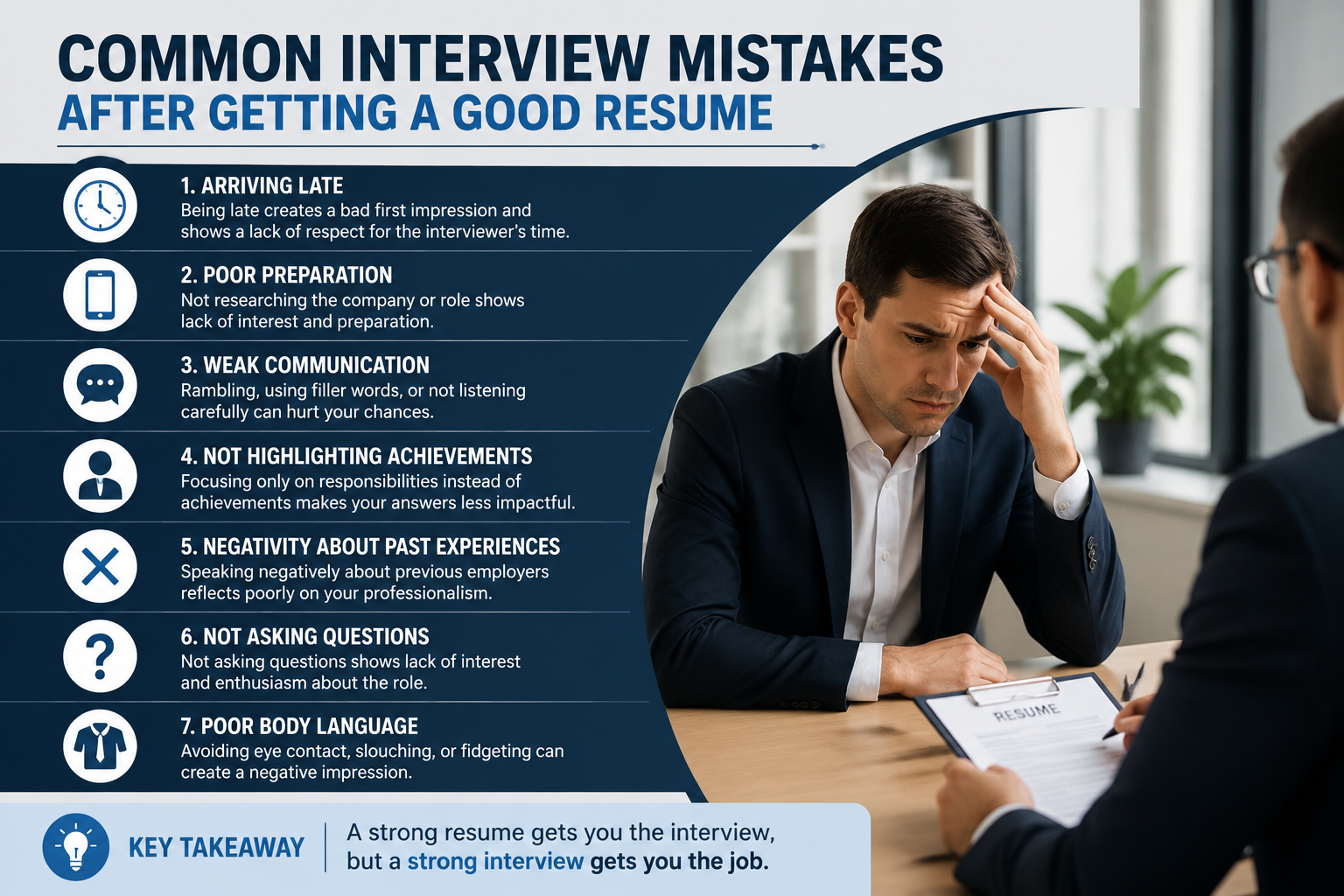
One of the most significant interview mistakes is failing to research the company. Understanding the organization’s culture, values, and recent developments can provide you with the context needed to tailor your responses. Candidates who can align their skills and experiences with the company’s mission are often more impressive to interviewers.
2. Lack of Clarity on Your Resume
While your resume may highlight your qualifications, it is crucial to articulate your experiences clearly during the interview. Candidates often stumble over details that should be familiar to them. Prepare to discuss each role and achievement on your resume, highlighting how they relate to the position you are applying for.
3. Poor Body Language
Non-verbal communication plays a vital role in how you are perceived during an interview. Common mistakes include poor eye contact, slouching, or fidgeting. Positive body language, such as maintaining eye contact, sitting up straight, and offering a firm handshake, can significantly enhance your impression and demonstrate confidence.
4. Overlooking the STAR Technique
The STAR technique (Situation, Task, Action, Result) is an excellent method for answering behavioral interview questions. Candidates often fail to structure their responses effectively, leading to vague answers. Practice using the STAR method to provide clear, concise, and relevant examples that showcase your skills and experiences.
5. Neglecting to Ask Questions
Interviews are a two-way street, and not asking questions can be a significant interview mistake. Candidates who fail to engage with interviewers by asking insightful questions may come across as disinterested. Prepare a few thoughtful questions that demonstrate your interest in the role and the company.
6. Arriving Late
Punctuality is a reflection of your professionalism. Arriving late for an interview is one of the most common mistakes candidates make, and it can create a negative first impression. Ensure you plan your journey ahead of time and aim to arrive at least 15 minutes early.
7. Poorly Tailored Responses
Generic answers can indicate a lack of genuine interest in the position. Tailor your responses to reflect how your skills and experiences align with the job description. This demonstrates that you have put thought into your application and are eager to contribute to the organization.
Effective Interview Preparation Tips
Now that we have identified common interview mistakes, let’s explore some interview preparation tips that can help you avoid these pitfalls and maximize your chances of success.
1. Conduct Thorough Research
Research the company’s history, mission, values, and recent news. Understanding the organization's goals will allow you to position your experiences in a way that aligns with their needs. Use platforms like LinkedIn, Glassdoor, and the company’s official website to gather relevant information.
2. Practice Common Interview Questions
Prepare for common interview questions such as “Tell me about yourself,” “What are your strengths and weaknesses?” and “Why do you want to work here?” Practicing your responses can help alleviate anxiety and ensure you communicate your qualifications effectively.
3. Utilize Mock Interviews
Engaging in mock interviews with a friend or mentor can provide valuable feedback and help you become comfortable with the interview format. This practice can also assist in refining your answers and improving your body language.
4. Dress Appropriately
Your appearance plays a crucial role in creating a positive first impression. Dress appropriately for the company culture, opting for formal or business casual attire based on the organization's expectations.
5. Follow Up After the Interview
Sending a follow-up thank-you email after the interview not only shows your appreciation but also reinforces your interest in the position. A well-crafted thank-you note can leave a lasting impression and keep you top of mind for the interviewer.
Frequently Asked Questions (FAQs)
1. What are the most common interview mistakes to avoid?
Common interview mistakes include inadequate company research, poor body language, failure to ask questions, and arriving late. Each of these can negatively impact your chances of success.
2. How can I prepare effectively for an interview?
Effective preparation involves conducting thorough research on the company, practicing common interview questions, utilizing mock interviews, dressing appropriately, and following up after the interview.
3. Why is body language important during an interview?
Body language can convey confidence and professionalism. Positive body language, such as maintaining eye contact and sitting up straight, can significantly influence the interviewer’s perception of you.
4. What should I do if I don’t know the answer to a question?
If you encounter a question you are unsure about, it’s okay to take a moment to think. You can also ask for clarification or respond with your thought process, demonstrating your problem-solving skills.
5. How long should my follow-up email be?
Your follow-up email should be concise, ideally around 3-5 short paragraphs. Express gratitude for the opportunity, reiterate your interest, and briefly highlight why you’re a good fit for the position.
Conclusion
Turning your resume into a successful interview requires understanding and avoiding common interview mistakes. By implementing effective interview preparation tips, you can greatly enhance your chances of impressing potential employers. Remember, each interview is a learning experience, and with practice, you can refine your skills to achieve interview success.
If you found this blog helpful, share it with your friends and fellow job seekers. For more tips and insights on job interviews and career advancement, subscribe to our newsletter today!