
Latest Post




Quality Management Courses



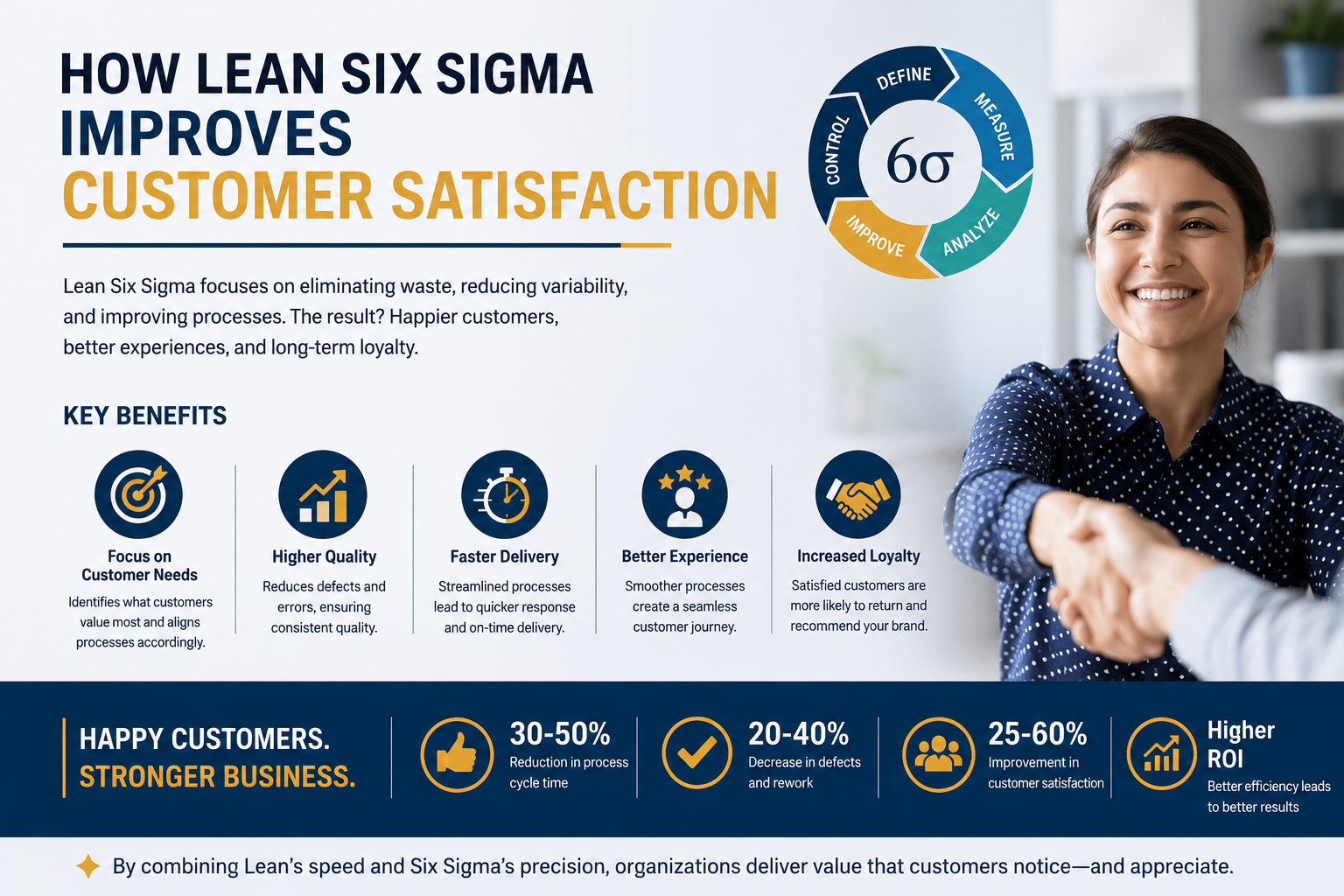

In today’s competitive market, businesses are constantly seeking ways to enhance their operations and deliver exceptional customer experiences. One methodology that has gained significant traction is Lean Six Sigma. This powerful approach not only streamlines processes and reduces waste but also plays a crucial role in improving customer satisfaction improvement. In this blog, we will explore how Lean Six Sigma can enhance customer satisfaction, focusing on its impact on the customer experience, quality management in customer service, and the importance of the Voice of the Customer (VOC) in Six Sigma.
Understanding Lean Six Sigma
Before diving into its benefits for customer satisfaction, let’s briefly understand what Lean Six Sigma is. Lean principles focus on eliminating waste and increasing efficiency, while Six Sigma emphasizes reducing defects and improving quality. By integrating these two methodologies, businesses can optimize their processes, ultimately leading to improved outcomes for customers.
The Importance of Customer Satisfaction Improvement
Customer satisfaction is a key indicator of a company’s performance. Satisfied customers are more likely to become repeat buyers, recommend your services to others, and contribute positively to your brand image. To achieve customer satisfaction improvement, businesses must understand their customers’ needs and expectations, and continually strive to meet or exceed them.
How Lean Six Sigma Enhances Customer Satisfaction
1. Streamlining Processes for Better Customer Experience
One of the primary goals of Lean Six Sigma is to streamline processes. By identifying and eliminating non-value-added activities, businesses can reduce the time it takes to deliver products and services. For instance, a manufacturing company in India that adopts Lean Six Sigma can minimize production delays, ensuring customers receive their orders promptly. This, in turn, leads to higher customer experience improvement.
2. Reducing Defects to Improve Quality
Defects can severely impact customer satisfaction. When customers receive products with defects, their trust in the brand diminishes. Lean Six Sigma employs statistical tools to identify the root causes of defects and implement corrective actions. For instance, a service provider can analyze customer feedback to determine the most common issues faced by clients, enabling them to make informed improvements. This commitment to quality management in customer service fosters loyalty and enhances overall customer satisfaction.
3. Implementing the Voice of the Customer (VOC)
The Voice of the Customer (VOC) is a vital component of the Lean Six Sigma methodology. It involves gathering and analyzing customer feedback to understand their preferences, needs, and pain points. By actively listening to customers, businesses can tailor their offerings to better meet expectations. For example, a retail store may conduct surveys to gauge customer satisfaction levels and identify areas for improvement. This alignment with customer needs is essential for lean six sigma customer satisfaction.
Benefits of Lean Six Sigma in Customer Service
Implementing Lean Six Sigma in customer service can lead to numerous benefits that directly influence customer satisfaction. Let’s explore some of these advantages:
1. Enhanced Responsiveness
With streamlined processes, businesses can respond to customer inquiries and issues more quickly. This enhanced responsiveness is vital in today’s fast-paced environment where customers expect timely assistance.
2. Improved Product and Service Quality
By focusing on quality management, businesses can deliver superior products and services. This improvement not only reduces complaints but also boosts customer confidence in the brand.
3. Increased Employee Engagement
Lean Six Sigma fosters a culture of continuous improvement, which encourages employees to take ownership of their roles. Engaged employees are more likely to provide exceptional customer service, positively impacting customer satisfaction.
4. Better Understanding of Customer Needs
Through VOC initiatives, companies gain deeper insights into customer preferences. This understanding allows businesses to innovate and adapt their offerings to meet evolving demands, further enhancing customer satisfaction.
Real-World Examples of Lean Six Sigma in Action
To fully appreciate the impact of Lean Six Sigma on customer satisfaction, let’s look at some real-world examples from Indian companies:
1. Tata Motors
Tata Motors applied Lean Six Sigma principles to enhance its manufacturing processes. By reducing defects in vehicle production and improving turnaround times, the company significantly increased customer satisfaction, resulting in a stronger market presence.
2. HDFC Bank
HDFC Bank utilized Lean Six Sigma methodologies to streamline its customer service operations. By analyzing customer feedback and implementing changes based on VOC insights, the bank improved customer service response times and overall satisfaction rates.
Implementing Lean Six Sigma for Customer Satisfaction
For businesses looking to implement Lean Six Sigma to improve customer satisfaction, here are some steps to consider:
1. Assess Current Processes
Begin by analyzing your existing processes to identify bottlenecks and areas that need improvement. This assessment will provide a foundation for your Lean Six Sigma initiatives.
2. Gather Customer Feedback
Utilize surveys, interviews, and other tools to gather VOC data. Understanding your customers’ needs is crucial for targeted improvements.
3. Train Employees
Invest in training programs to equip employees with the skills necessary to implement Lean Six Sigma principles effectively. Engaged employees are vital for successful implementation.
4. Monitor Progress
Establish key performance indicators (KPIs) to measure the success of your initiatives. Regularly review these metrics to ensure that you’re on track to achieve your customer satisfaction goals.
FAQs About Lean Six Sigma and Customer Satisfaction
1. What is Lean Six Sigma?
Lean Six Sigma is a methodology that combines Lean principles, which focus on eliminating waste, with Six Sigma techniques aimed at improving quality and reducing defects.
2. How does Lean Six Sigma improve customer satisfaction?
By streamlining processes, reducing defects, and incorporating the Voice of the Customer (VOC), Lean Six Sigma enhances overall customer experience and satisfaction.
3. What is the Voice of the Customer (VOC)?
The Voice of the Customer (VOC) refers to the process of gathering customer feedback to understand their needs, preferences, and expectations.
4. Can Lean Six Sigma be applied to service industries?
Yes, Lean Six Sigma can effectively be applied in service industries to enhance quality management in customer service and improve customer satisfaction.
Conclusion
In conclusion, Lean Six Sigma is a powerful methodology that can significantly enhance customer satisfaction improvement. By streamlining processes, reducing defects, and actively incorporating customer feedback, businesses can create exceptional customer experiences that foster loyalty and drive growth. As Indian companies continue to adopt Lean Six Sigma practices, the potential for improved customer satisfaction is immense.
Are you ready to enhance your customer satisfaction through Lean Six Sigma? Start your journey today by exploring training programs or consulting services that can help you implement this powerful methodology.
Call to Action: Contact us today to learn how Lean Six Sigma can transform your business and boost your customer satisfaction levels!