
Latest Post





Quality Management Courses




How to Reduce Rework Using Lean Six Sigma
In today's fast-paced business environment, organizations are constantly striving to improve their processes and reduce costs. One of the most significant challenges many face is the issue of rework. Rework not only wastes time and resources but also affects customer satisfaction and overall profitability. In this blog, we will explore how Lean Six Sigma can help you reduce rework and achieve significant rework reduction by focusing on process defects and implementing lean quality improvement techniques.
Understanding Rework and Its Impact on Businesses
Rework refers to the process of correcting or redoing work that was not done correctly the first time. In India, where competition is fierce and margins are tight, the cost of rework can be substantial. It not only leads to increased labor costs but also delays project timelines, impacting customer satisfaction and brand reputation.
Why Does Rework Occur?
Rework occurs due to various reasons, including:
Identifying these root causes is crucial for effective rework reduction. This is where Lean Six Sigma comes into play.
What is Lean Six Sigma?
Lean Six Sigma is a powerful methodology that combines the principles of Lean manufacturing and Six Sigma. Lean focuses on eliminating waste and improving flow, while Six Sigma aims to reduce process variation and defects. Together, they provide a robust framework for process optimization and quality improvement.
Key Principles of Lean Six Sigma
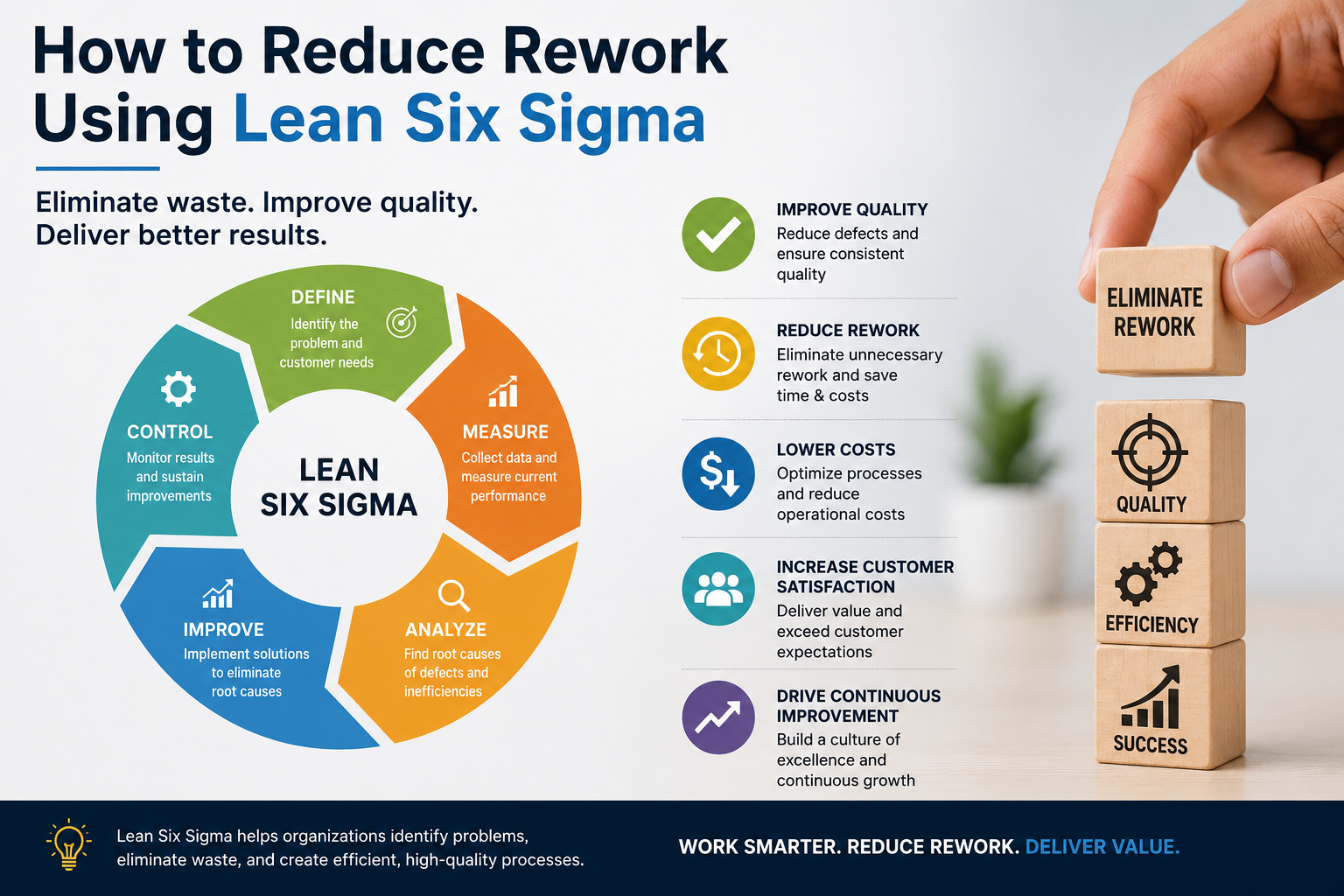
Steps to Reduce Rework Using Lean Six Sigma
1. Define the Problem
The first step in any Lean Six Sigma project is to define the problem. For rework reduction, this could involve identifying specific processes that are prone to defects. This could be anything from manufacturing processes to service delivery.
2. Measure Current Performance
Once the problem is defined, the next step is to measure current performance. This could involve tracking the number of defects per process or the amount of time spent on rework. By gathering this data, organizations can establish a baseline for improvement.
3. Analyze Root Causes
With the right data in hand, teams can analyze the root causes of rework. This often involves tools such as the Fishbone diagram or the 5 Whys technique. By understanding the underlying issues, businesses can target their improvement efforts more effectively.
4. Develop Solutions
Once the root causes have been identified, it’s time to develop solutions. This could involve process redesign, additional training for staff, or implementing new quality control measures. The aim here is to create an environment that minimizes the chances of defects occurring.
5. Implement Control Measures
After implementing solutions, it is crucial to establish control measures. This could involve regular audits of processes, ongoing training programs, and the use of performance indicators to track progress. Maintaining these measures ensures that improvements are sustained over time, leading to long-term rework reduction.
Benefits of Reducing Rework
Reducing rework through Lean Six Sigma offers several benefits:
Real-World Examples of Rework Reduction
Let’s look at a few examples of organizations in India that have successfully implemented Lean Six Sigma to reduce rework:
1. Manufacturing Sector
A leading automotive manufacturer in India faced significant rework due to assembly defects. By implementing Lean Six Sigma, they identified key process flaws and introduced standardized work procedures. As a result, they achieved a 30% reduction in rework within six months.
2. IT Services
An IT services company struggled with high defect rates in software development. By utilizing Lean Six Sigma methodologies, they improved their coding and testing processes, leading to a remarkable 40% decrease in rework. This not only saved costs but also enhanced client satisfaction.
FAQs
What is the primary goal of Lean Six Sigma?
The primary goal of Lean Six Sigma is to improve quality by reducing defects and waste in processes, leading to increased efficiency and customer satisfaction.
How can one measure rework in a business?
Rework can be measured by tracking the number of defects per process, the time spent on redoing tasks, and customer feedback on quality issues.
Can Lean Six Sigma be applied to service industries?
Yes, Lean Six Sigma can be effectively applied to service industries, including healthcare, finance, and IT, to improve quality and reduce rework.
What are some common tools used in Lean Six Sigma?
Some common tools include the DMAIC framework, Fishbone diagrams, Pareto charts, and process mapping.
Conclusion
In conclusion, reducing rework is essential for organizations looking to enhance efficiency and customer satisfaction. By leveraging Lean Six Sigma methodologies, businesses can identify defects, streamline processes, and implement sustainable improvements. As the Indian market continues to evolve, embracing these principles will not only help organizations thrive but also foster a culture of continuous improvement.
If you’re looking to implement Lean Six Sigma in your organization and achieve significant rework reduction, contact us today for expert guidance and support!