Latest Post


Quality Management Courses



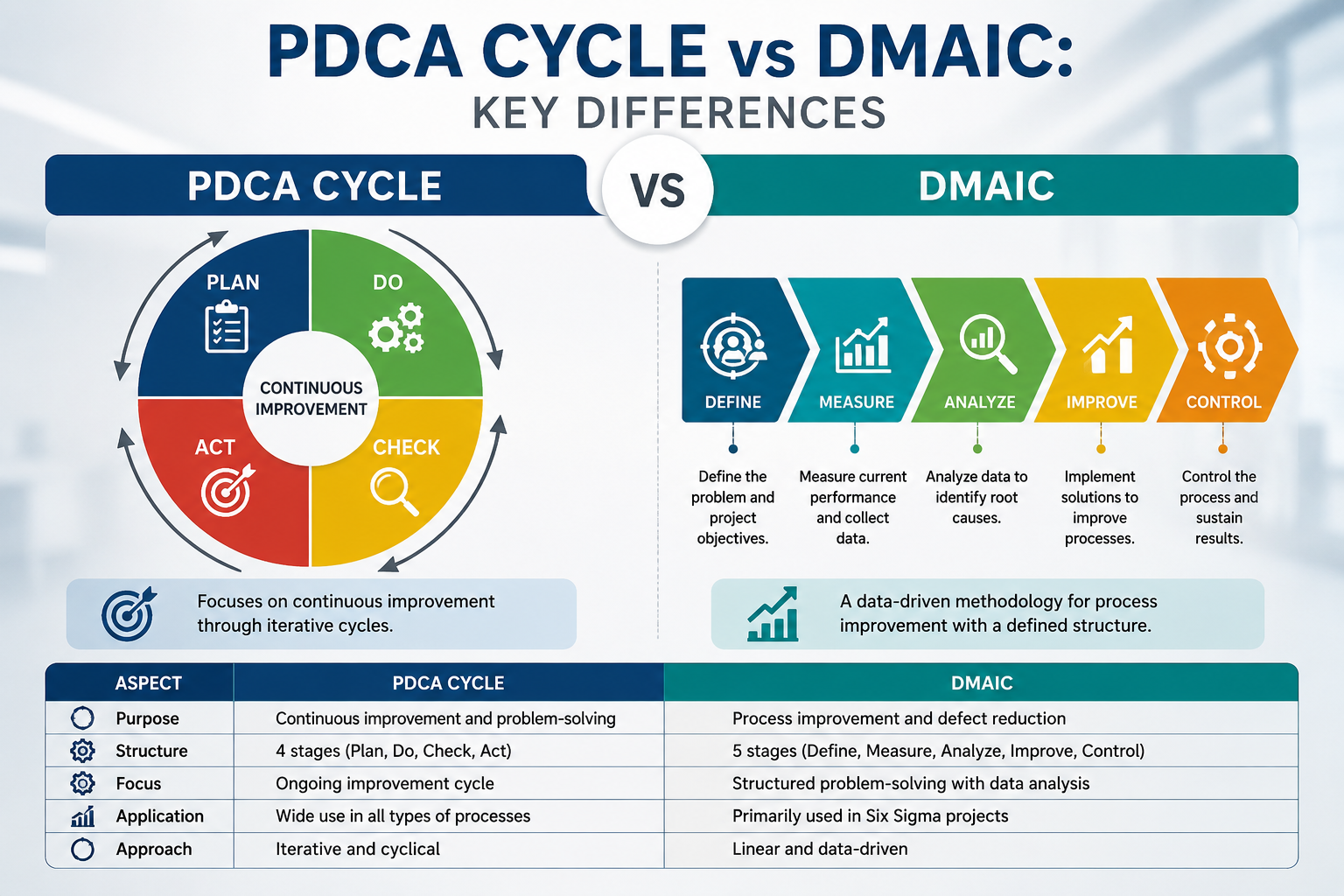

In today's fast-paced business environment, organizations are constantly seeking ways to enhance their processes and improve quality. Two prominent methodologies that have gained traction in the realm of continuous improvement models are the PDCA cycle and DMAIC. While both frameworks aim to streamline operations and boost quality, they differ significantly in their approaches and applications. In this article, we will explore the key differences between PDCA vs DMAIC, helping you determine which methodology is best suited for your organization's process improvement needs.
Understanding the PDCA Cycle
The PDCA cycle, also known as the Deming Circle, is a four-step iterative process that focuses on continuous improvement. The acronym stands for:
Benefits of the PDCA Cycle
The PDCA cycle is particularly effective for organizations looking to foster a culture of continuous improvement. Some benefits include:
Understanding DMAIC
DMAIC, which stands for Define, Measure, Analyze, Improve, and Control, is a data-driven quality improvement method used primarily in Six Sigma. This methodology focuses on improving existing processes rather than creating new ones. The five phases are:
Benefits of DMAIC
DMAIC is particularly beneficial for organizations that are focused on data-driven decision-making and process optimization. Some key benefits include:
Key Differences Between PDCA vs DMAIC
While both PDCA and DMAIC are valuable frameworks for quality improvement methods, they have distinct differences that make them suitable for different contexts. Here are the key differences:
1. Focus and Scope
The PDCA cycle is broad and adaptable, making it suitable for various continuous improvement initiatives. It is often used in smaller-scale projects or ongoing improvements within teams. On the other hand, DMAIC is more focused and structured, primarily used for complex problem-solving in Six Sigma projects.
2. Methodology
PDCA is iterative and cyclical, allowing organizations to continuously refine processes. DMAIC follows a linear progression, which is more suited for projects where a clear problem is identified and needs to be solved systematically.
3. Data Usage
While both methodologies use data, DMAIC relies heavily on data analysis throughout all its phases. PDCA may use data, but it does not emphasize it as strongly, focusing more on the implementation and feedback aspects.
4. Complexity
PDCA is generally simpler and easier to implement, making it ideal for teams new to lean improvement cycles or organizations seeking quick wins. DMAIC, however, requires more training and understanding of statistical tools, making it more complex but highly effective in addressing significant issues.
5. Applicability
PDCA can be applied in various environments, including manufacturing, healthcare, and service industries. DMAIC is primarily used in manufacturing and service sectors where data-driven decision-making is crucial.
When to Use PDCA and DMAIC
Understanding when to use PDCA vs DMAIC can significantly impact your organization's process improvement efforts:
FAQs about PDCA vs DMAIC
1. Can PDCA and DMAIC be used together?
Yes, organizations can effectively use both methodologies together. For instance, PDCA can be used to implement small improvements, while DMAIC can address larger, more complex issues.
2. Is PDCA suitable for all industries?
Yes, the PDCA cycle is highly adaptable and can be applied across various industries such as manufacturing, service, healthcare, and education.
3. Do I need special training to implement DMAIC?
While basic knowledge of quality improvement principles can help, formal training in Six Sigma and statistical analysis is often recommended for successful DMAIC implementation.
4. What are some tools that can be used with PDCA and DMAIC?
Common tools include process mapping, root cause analysis, control charts, and cause-and-effect diagrams. These tools help visualize data and facilitate improvements in both methodologies.
Conclusion
In summary, understanding the differences between PDCA vs DMAIC is crucial for organizations aiming to enhance their quality and efficiency. While both models are effective for process improvement, your choice may depend on the complexity of the issue at hand, the need for data analysis, and the scale of the improvement project. By selecting the right methodology, organizations can foster a culture of continuous improvement and achieve sustainable results.
If you're ready to implement continuous improvement in your organization, consider exploring both PDCA and DMAIC further. Assess your unique needs and choose the model that aligns best with your goals. For more insights and guidance on quality improvement methods, subscribe to our newsletter!
Call to Action: Join the conversation! Share your experiences with PDCA and DMAIC in the comments below. What has worked for you in your continuous improvement journey?