
In today's competitive job market, having a well-crafted resume is essential, especially for roles in operations management. Whether you are an experienced operations manager or just starting out as an operations executive, your resume should clearly showcase your skills, achievements, and relevant experience. This guide will help you create an effective operations manager resume, operations executive resume, and provide insights on the best operations resume format to use. Additionally, we'll cover how to optimize your supply chain resume for Applicant Tracking Systems (ATS).
Understanding Operations Management Roles
Operations management is a crucial function in any organization, focusing on the efficient production of goods and services. This role encompasses various responsibilities, including process optimization, supply chain management, and team leadership. When writing your resume, it's vital to understand the specific requirements of the position you are targeting.
Key Components of an Operations Manager Resume
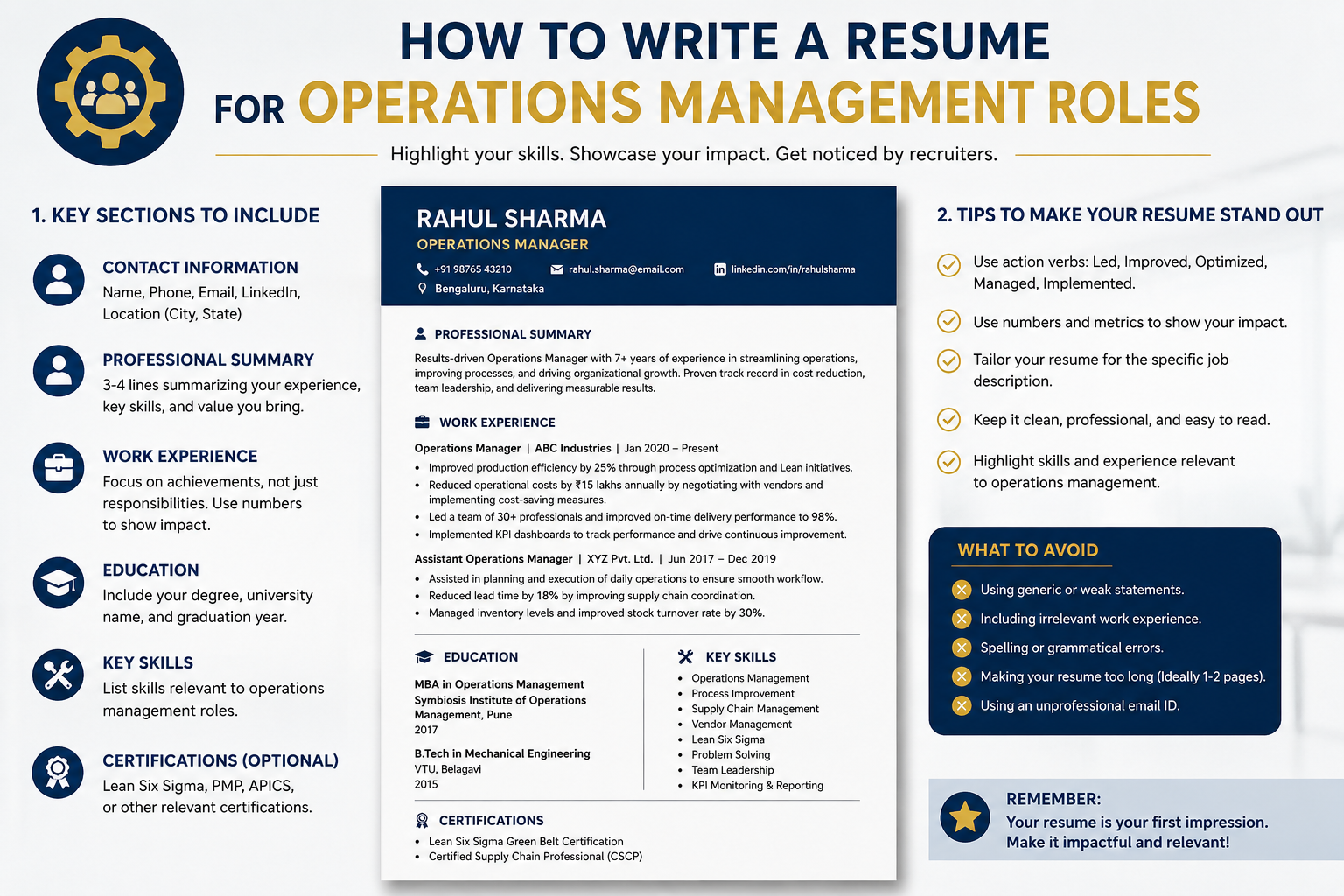
Your operations manager resume should include several key components that highlight your qualifications. Here’s a breakdown of what to include:
1. Contact Information
At the top of your resume, clearly list your name, phone number, email address, and LinkedIn profile. Make sure this information is up to date.
2. Professional Summary
Your professional summary should be a brief overview of your career, emphasizing your experience and skills relevant to operations management. Aim for two to three sentences that capture your value. For example:
Results-driven operations manager with over 8 years of experience in optimizing supply chain processes and enhancing operational efficiency. Proven track record in leading cross-functional teams and implementing cost-saving strategies.
3. Key Skills
List relevant skills that align with operations management roles. Use keywords such as:
4. Professional Experience
Detail your work experience in reverse chronological order. For each position, include:
Under each job, use bullet points to describe your responsibilities and achievements. Focus on quantifiable results, such as:
Implemented a new inventory management system that reduced costs by 15% and improved delivery times by 20%.
5. Education
Include your educational background, starting with the highest degree. Mention your degree, major, university, and graduation year. If you have relevant certifications, such as Six Sigma or PMP, be sure to include those as well.
6. Additional Sections
Depending on your background, consider adding sections for:
Choosing the Right Operations Resume Format
When creating your operations resume, the format you choose can significantly impact how potential employers perceive your application. Here are three popular formats:
1. Chronological Format
This format lists your work experience in reverse chronological order, making it ideal for those with a solid work history in operations management. It allows employers to see your career progression at a glance.
2. Functional Format
The functional format focuses on skills rather than work history, making it suitable for those changing careers or with gaps in employment. This format highlights your relevant skills and achievements in operations management.
3. Combination Format
The combination format merges elements of both chronological and functional formats. It showcases your skills while providing a detailed work history, making it a versatile choice for operations professionals.
Optimizing Your Operations Resume for ATS
Many companies use Applicant Tracking Systems (ATS) to filter resumes before they reach human eyes. To ensure your operations resume gets through these systems, follow these tips:
1. Use Relevant Keywords
Incorporate keywords from the job description in your resume, such as "supply chain management," "process improvement," and "operations strategy." This will help your resume rank higher in ATS searches.
2. Keep Formatting Simple
Avoid using complex formats, graphics, or unusual fonts. Stick to standard headings and a clean, readable layout. Use bullet points for easy reading.
3. Tailor Your Resume
Customize your operations resume for each job application. Highlight the most relevant experience and skills for the specific role you are applying for.
Common Mistakes to Avoid
When crafting your operations executive resume, be mindful of common pitfalls:
1. Generic Resumes
Sending out a generic resume can hurt your chances of standing out. Tailor your resume for each position, focusing on the skills and experiences that are most relevant to the specific job.
2. Overloading with Information
While it's essential to provide detailed information, avoid overwhelming the reader with excessive details. Keep your resume concise and focused on the most impactful achievements.
3. Ignoring Proofreading
Typos and grammatical errors can make a poor impression. Always proofread your resume or have someone else review it before submission.
FAQs
Q1: What should I include in my operations manager resume if I have no experience?
A: Focus on relevant skills, internships, coursework, and any volunteer work related to operations. Highlight transferable skills that demonstrate your ability to manage processes.
Q2: How long should my operations resume be?
A: Ideally, your resume should be one to two pages long, depending on your experience. Ensure that every section adds value and relevance to the role you are applying for.
Q3: Can I use a creative format for my operations resume?
A: While creativity can help you stand out, it’s safer to stick with a clean, professional format, especially when applying to larger companies that use ATS.
Q4: Should I include my GPA in my operations resume?
A: If you are a recent graduate, including your GPA can be beneficial, especially if it is above 3.0. For more experienced professionals, it’s typically not necessary.
Conclusion
Creating a compelling operations manager resume requires careful consideration of your skills, experience, and the specific requirements of the role. By following the guidelines outlined in this article, you can craft a resume that effectively showcases your qualifications and helps you stand out in the competitive field of operations management. Remember to optimize your resume for ATS and tailor it to each job application for the best results.
Call to Action
If you’re ready to take the next step in your career, start crafting your operations resume today! For more personalized assistance or resume writing services, contact us now and let our experts help you land your dream job in operations management!