Latest Post



Quality Management Courses



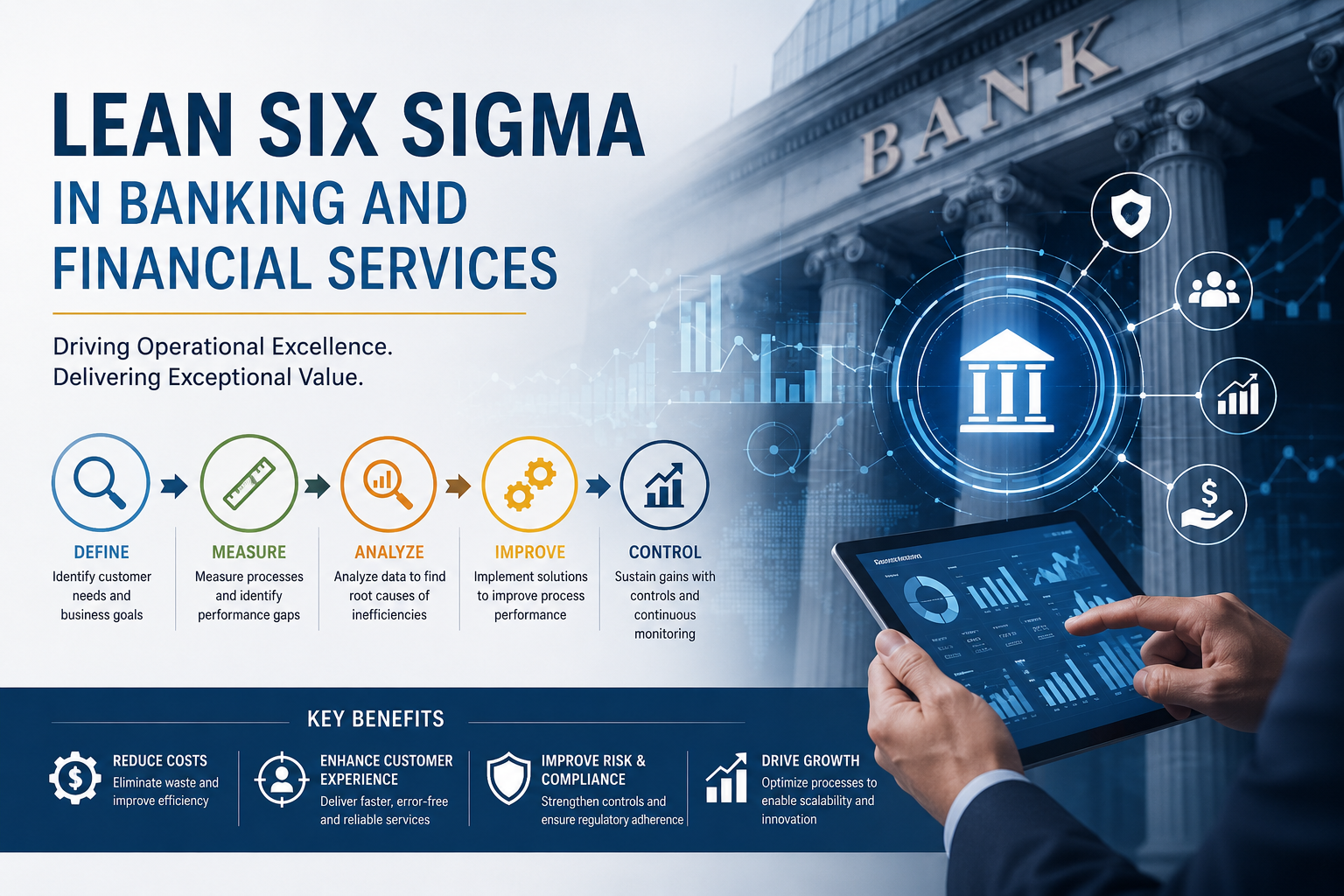

Lean Six Sigma in Banking and Financial Services
In the fast-paced world of banking and financial services, operational efficiency is not just a goal; it’s a necessity. With increasing competition and the demand for superior customer service, organizations are turning to Lean Six Sigma methodologies to streamline their processes. This blog explores the integration of Six Sigma banking and lean banking process improvement, highlighting their significance in the Indian financial landscape.
Understanding Lean Six Sigma
Lean Six Sigma combines two powerful methodologies: Lean, which focuses on eliminating waste, and Six Sigma, which emphasizes reducing variation in processes. Together, they provide a comprehensive framework for improving quality and efficiency.
The Importance of Lean Six Sigma in Banking
The banking sector in India is undergoing significant transformation, driven by regulatory changes, technological advancements, and evolving customer expectations. Implementing Lean Six Sigma can help banks achieve:
Key Lean Six Sigma Tools and Techniques for Banking
To successfully implement Lean Six Sigma in banking, organizations can utilize various tools and techniques:
1. DMAIC Framework
The DMAIC (Define, Measure, Analyze, Improve, Control) framework is essential for process improvement. In a banking context:
2. Value Stream Mapping
This tool helps visualize the flow of materials and information in banking processes. By mapping out the current state, banks can identify bottlenecks and areas of waste, facilitating targeted improvements.
3. Root Cause Analysis
Understanding the underlying causes of issues is vital. Techniques such as the 5 Whys or Fishbone Diagram can help bankers pinpoint problems that lead to inefficiencies.
Implementing Lean Six Sigma in Indian Banks
For Indian banks, the implementation of Lean Six Sigma requires a structured approach:
1. Leadership Commitment
Successful implementation starts at the top. Bank leadership must champion Lean Six Sigma initiatives, providing the necessary resources and support to employees.
2. Training and Development
Investing in training programs for employees is crucial. By equipping staff with Lean Six Sigma skills, banks can build a culture of continuous improvement.
3. Pilot Projects
Before a full-scale rollout, conducting pilot projects in specific departments allows banks to test and refine their Lean Six Sigma strategies.
Case Studies: Success Stories in Lean Six Sigma Banking
Several Indian banks have successfully implemented Lean Six Sigma, showcasing its effectiveness:
1. ICICI Bank
ICICI Bank adopted Lean Six Sigma to enhance its loan processing system. By streamlining workflows and reducing processing times, the bank significantly improved customer satisfaction and reduced operational costs.
2. HDFC Bank
HDFC Bank utilized Lean Six Sigma techniques to improve its service delivery in branches. The bank mapped out customer interactions and identified key areas for improvement, resulting in faster service times and increased customer loyalty.
Challenges in Implementing Lean Six Sigma in Banking
While Lean Six Sigma offers numerous benefits, banks may face challenges during implementation:
1. Resistance to Change
Employees may be resistant to new processes and methodologies. Effective change management strategies and communication are crucial to overcoming this barrier.
2. Data Availability
Access to accurate and timely data is vital for Lean Six Sigma initiatives. Banks must invest in technology that supports data collection and analysis.
Future Trends in Lean Six Sigma for Banking
As the banking industry evolves, so will the application of Lean Six Sigma. Future trends include:
FAQs about Lean Six Sigma in Banking
What is Lean Six Sigma?
Lean Six Sigma is a methodology that combines Lean principles, which focus on eliminating waste, with Six Sigma, which emphasizes reducing variation and improving quality.
How can Lean Six Sigma benefit banks?
Implementing Lean Six Sigma helps banks enhance customer satisfaction, reduce operational costs, and improve compliance with regulations.
What tools are used in Lean Six Sigma?
Common tools include the DMAIC framework, Value Stream Mapping, and Root Cause Analysis techniques.
Is Lean Six Sigma suitable for all banks?
Yes, Lean Six Sigma can be tailored to fit the specific needs and processes of any bank, regardless of size or market segment.
Conclusion
In an era where efficiency and customer satisfaction are paramount, Lean Six Sigma provides banking and financial services organizations with a structured approach to enhance their operations. By embracing six sigma banking principles and focusing on lean banking process improvement, Indian banks can not only thrive in a competitive landscape but also ensure sustained growth and customer loyalty.
If you’re ready to transform your bank’s operations with Lean Six Sigma, contact us today for expert guidance and training programs tailored to your institution’s needs!