

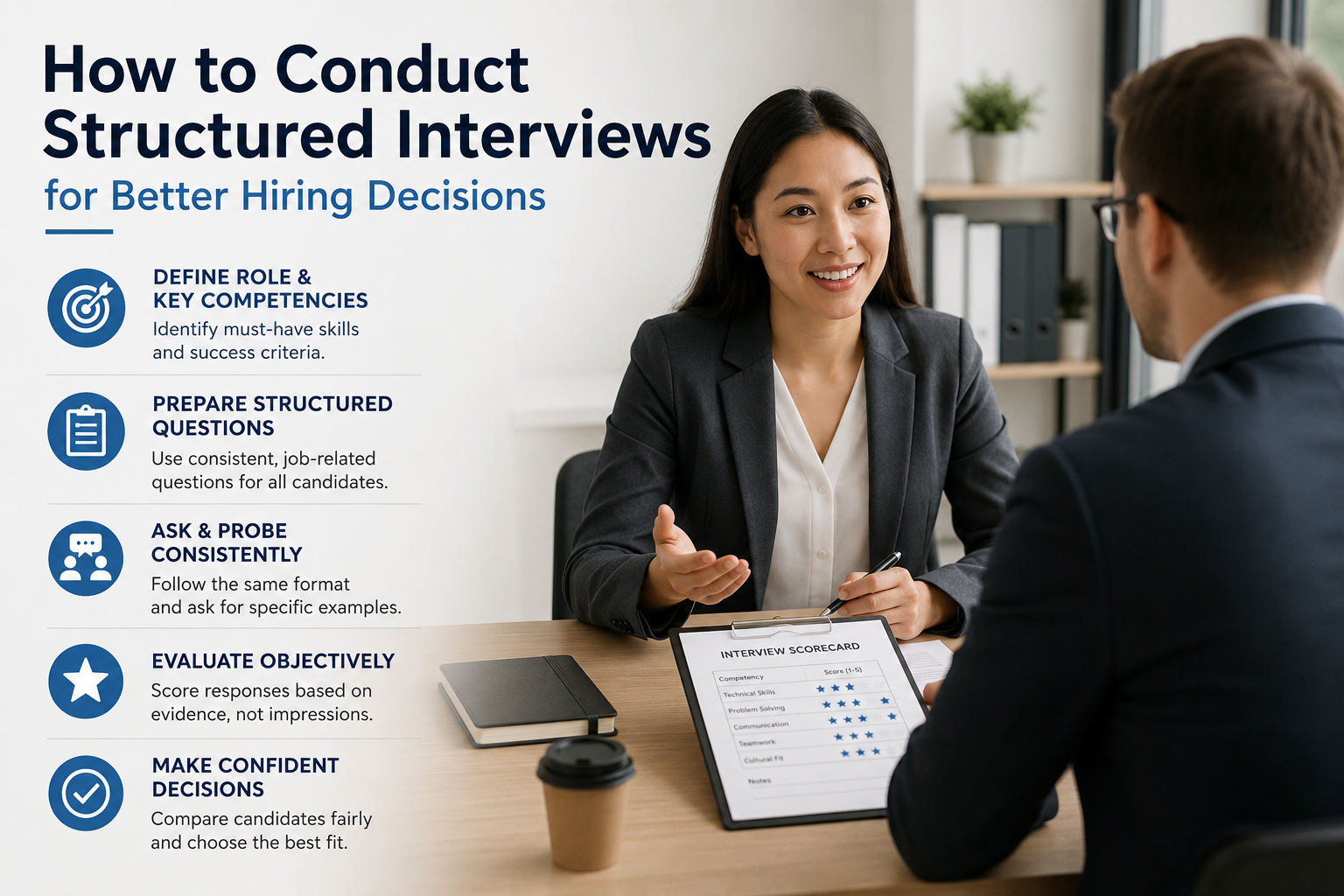

In today’s competitive job market, making the right hiring decisions has never been more critical. One of the most effective methods to enhance your interview process is through structured interviews. This approach not only streamlines the hiring process but also increases the chances of finding the right candidate for the job. In this blog, we will explore how to conduct structured interviews effectively and why they are beneficial for your organization.
What Are Structured Interviews?
Structured interviews are a systematic approach to interviewing candidates. Unlike unstructured interviews, which can be spontaneous and subjective, structured interviews follow a specific set of predetermined questions and evaluation criteria. This method ensures that all candidates are assessed on the same basis, reducing bias and improving the overall quality of hiring decisions.
Benefits of Structured Interviews
1. Enhanced Consistency
One of the primary advantages of structured interviews is that they provide consistency in the interview process. Each candidate is asked the same questions in the same order, allowing for fair comparisons. This consistency helps eliminate the variations that can arise from unstructured interviews, where the interviewer’s mood or personal biases may influence the questions asked.
2. Improved Predictive Validity
Research shows that structured interviews have higher predictive validity compared to unstructured ones. This means that they are more effective at predicting a candidate’s future job performance. By focusing on job-related competencies and skills, structured interviews help identify candidates who are most likely to succeed in the role.
3. Reduced Bias
Structured interviews minimize biases that can affect hiring decisions. By adhering to a standardized set of questions and evaluation criteria, interviewers are less likely to be influenced by irrelevant factors such as a candidate’s appearance or personal background. This leads to a more equitable hiring process, which is particularly important in a diverse country like India.
How to Conduct Structured Interviews
Step 1: Define Job Requirements
Before conducting a structured interview, it’s crucial to define the job requirements clearly. Identify the skills, competencies, and qualifications needed for the role. Collaborate with team members and stakeholders to create a comprehensive job description. This step sets the foundation for your structured interview process.
Step 2: Develop Interview Questions
Once the job requirements are established, the next step is to develop a set of standardized interview questions. These questions should be directly related to the competencies and skills identified earlier. Aim for a mix of behavioral questions (e.g., “Can you describe a time when you faced a challenge at work?”) and situational questions (e.g., “What would you do if you had a tight deadline?”). This diversity helps assess candidates from different angles.
Step 3: Create an Evaluation Rubric
An evaluation rubric is essential for assessing candidates consistently. Create a scoring system that allows interviewers to rate candidates on a scale (e.g., 1 to 5) based on their responses. Establish clear criteria for each score, ensuring that all interviewers understand how to evaluate answers. This rubric will serve as a guide during the interview and help in comparing candidates objectively.
Step 4: Train Interviewers
Training is a critical component of the structured interview process. Ensure that all interviewers are familiar with the structured interview format, the evaluation rubric, and the importance of avoiding biases. Conduct mock interviews to give interviewers a chance to practice and receive feedback. This training will help maintain consistency and fairness during actual interviews.
Step 5: Conduct the Interview
On the day of the interview, ensure that the environment is conducive to a productive discussion. Start with a brief introduction, explaining the purpose of the interview and the structure it will follow. Ask the predetermined questions, allowing candidates to elaborate on their answers where necessary. Remember to take notes during the interview to capture key points for later evaluation.
Step 6: Evaluate Candidates
After all interviews are conducted, it’s time to evaluate candidates using the established rubric. Gather feedback from all interviewers and compare scores. Discuss any discrepancies in evaluations to ensure a well-rounded decision-making process. The structured interview process should make it easier to identify top candidates based on their performance.
Common Challenges in Structured Interviews
1. Rigidness
One potential challenge of structured interviews is the perception of rigidity. While it’s essential to follow a structured format, interviewers should still allow for some flexibility. Candidates may provide unexpected insights that can be valuable. Strike a balance between sticking to the script and being open to spontaneous conversation.
2. Time-Consuming
Structured interviews can be time-consuming, especially when developing questions and evaluation rubrics. However, the upfront investment in time pays off in the long run by leading to better hiring decisions. Consider this a necessary step in strengthening your hiring process.
Conclusion
In conclusion, conducting structured interviews is a powerful strategy for improving your hiring decisions. By following a systematic approach, you can enhance consistency, reduce bias, and increase the likelihood of selecting the right candidates for your organization. As the job market in India continues to evolve, adapting your interview process to include structured interviews can give you a competitive edge in attracting top talent.
FAQs
1. What is the difference between structured and unstructured interviews?
Structured interviews follow a predetermined set of questions and evaluation criteria, ensuring consistency and reducing bias. Unstructured interviews are more spontaneous and can vary significantly between candidates, making them less reliable for comparison.
2. How long should a structured interview last?
A structured interview typically lasts between 30 minutes to an hour, depending on the number of questions and the depth of responses required. Ensure that the time is sufficient to cover all essential areas without feeling rushed.
3. Can structured interviews be adapted for different roles?
Yes, structured interviews can be tailored to fit various roles within an organization. Adjust your questions and evaluation criteria based on the specific skills and competencies required for each position.
4. How do I ensure my structured interview process is unbiased?
Training interviewers, using standardized questions, and implementing a scoring rubric are effective ways to minimize bias in structured interviews. Regularly reviewing the process for potential biases can also help maintain fairness.
Call to Action
Ready to improve your hiring decisions with structured interviews? Start implementing these steps today to build a more effective interview process. If you need assistance or further guidance, feel free to reach out to us. Let’s work together to find the best talent for your organization!