
Latest Post





Quality Management Courses



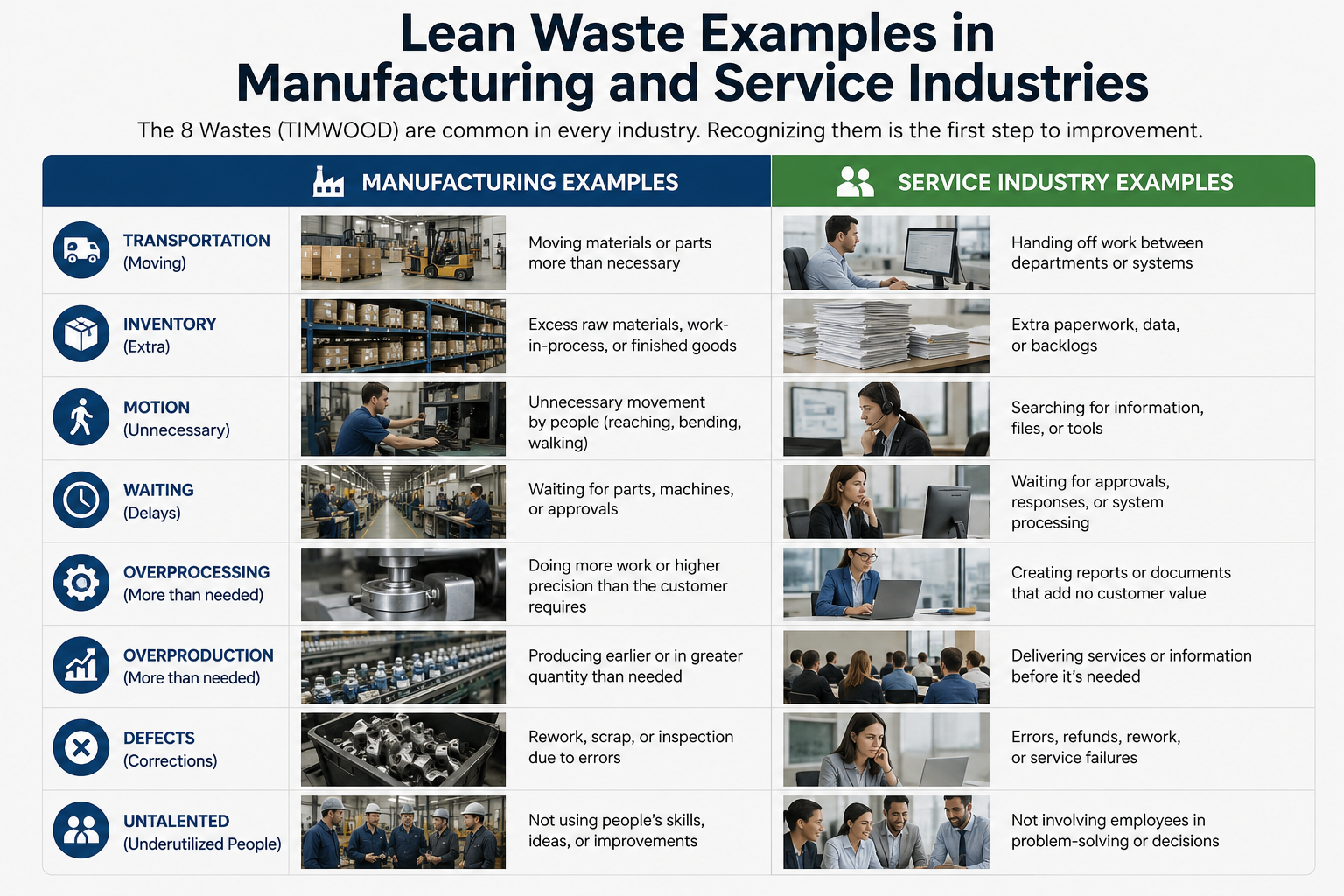

In today’s competitive market, both manufacturing and service industries are constantly seeking ways to improve efficiency and reduce waste. One effective methodology that has gained traction is Lean, which focuses on optimizing processes by eliminating waste. In this blog, we’ll delve into lean waste examples, particularly the 8 wastes of lean, and explore how understanding these muda examples can lead to significant improvements. Whether you're part of a manufacturing plant or a service-based organization in India, this guide will provide valuable insights into lean manufacturing waste reduction and service industry waste examples.
Understanding Lean and Muda
Before diving into specific lean waste examples, it’s crucial to understand the concepts of Lean and Muda. Lean is a systematic approach to identifying and eliminating waste through continuous improvement. The term "muda" refers to any activity that consumes resources but does not add value to the product or service. This concept is central to Lean methodology and is aimed at enhancing efficiency and productivity.
The 8 Wastes of Lean
The 8 wastes of lean, also known as the "DOWNTIME" acronym, encompass various forms of waste that organizations should aim to reduce or eliminate:
1. Defects
Defects are errors or flaws in products or services that result in rework or scrap. For instance, in manufacturing, a defect might occur during the assembly of a product, leading to increased costs and delays. In service industries, defects can manifest as incorrect billing or service delivery failures. Identifying and addressing defects promptly can significantly enhance customer satisfaction and reduce costs.
2. Overproduction
Overproduction occurs when more products are made than are needed at a given time. This not only ties up resources but also leads to excess inventory, which can become obsolete. For example, a garment manufacturer producing seasonal clothing well ahead of demand risks having unsold inventory. In the service sector, overproduction might involve providing services that customers do not require at that moment.
3. Waiting
Waiting refers to any idle time that occurs when processes are not moving forward. In manufacturing, this could happen when a machine breaks down, causing workers to wait for repairs. In service industries, waiting might occur when customers are left unattended while waiting for assistance. Reducing waiting time enhances efficiency and improves customer experience.
4. Non-utilized Talent
This waste highlights the failure to utilize employees' skills and talents effectively. For example, in a manufacturing setting, skilled workers might be assigned to menial tasks instead of leveraging their expertise for process improvement. In service industries, employees may have ideas for enhancing service delivery that go unheard. Encouraging employee engagement and utilizing their skills can lead to innovative solutions and improvements.
5. Transportation
Transportation waste involves unnecessary movement of products or materials between processes. In manufacturing, excessive transportation can occur if the layout of the plant is not optimized. In service environments, this might involve the unnecessary movement of documents or personnel that could be streamlined. Minimizing transportation waste not only saves time but also reduces the risk of damage to products.
6. Inventory
Excess inventory can tie up capital and create storage issues. In a manufacturing context, holding more raw materials than necessary can lead to spoilage or obsolescence. In the service industry, having too many supplies on hand can result in wastage. Efficient inventory management is crucial to lean manufacturing waste reduction.
7. Motion
Motion waste is associated with unnecessary movements by employees. This could be as simple as reaching for tools that are not readily accessible or taking too many steps to complete a task. Streamlining workflows to minimize unnecessary motion can lead to more efficient operations and a safer workplace.
8. Extra Processing
Extra processing refers to any additional steps that do not add value to the final product or service. In manufacturing, this could mean implementing unnecessary quality checks that do not improve the end product. In the service industry, it might involve redundant paperwork that complicates processes without providing additional benefits. Identifying and eliminating extra processing can lead to more streamlined operations.
Lean Waste Examples in Manufacturing
Manufacturing industries can greatly benefit from understanding lean waste examples. Here are a few practical instances:
Lean Waste Examples in the Service Industry
Service industries in India, from hospitality to healthcare, can also leverage lean principles. Here are some notable examples:
Implementing Lean Manufacturing Waste Reduction
To effectively implement lean manufacturing waste reduction, organizations should follow these steps:
FAQs about Lean Waste Examples
What are the 8 wastes of lean?
The 8 wastes of lean are defects, overproduction, waiting, non-utilized talent, transportation, inventory, motion, and extra processing. Each of these contributes to inefficiencies in manufacturing and service processes.
How can lean waste examples be applied to the service industry?
Lean waste examples can be applied in the service industry by analyzing processes to identify waste and implementing strategies to streamline operations, improve customer experience, and reduce costs.
Why is it important to reduce lean manufacturing waste?
Reducing lean manufacturing waste is crucial for improving efficiency, cutting costs, enhancing customer satisfaction, and maintaining a competitive edge in the market. It leads to better resource utilization and increased profitability.
Conclusion
Understanding lean waste examples is essential for organizations in both manufacturing and service industries. By identifying and reducing the 8 wastes of lean, companies can streamline processes, improve efficiency, and enhance customer satisfaction. Whether you’re in a bustling manufacturing facility or a customer-focused service environment, applying lean principles can lead to substantial improvements.
If your organization is ready to embark on a journey towards waste reduction and efficiency enhancement, contact us today to learn how we can assist you in implementing lean strategies tailored to your specific needs!