Latest Post

Quality Management Courses




In the world of process improvement, two methodologies often come up for discussion: Kaizen and Lean Six Sigma. Both approaches aim to enhance efficiency, reduce waste, and improve quality. However, they do so in different ways. In this blog, we will explore the nuances of kaizen vs lean six sigma, helping you understand which method might be more suitable for your organization in India.
Understanding Kaizen Methodology
Kaizen, a Japanese term meaning "continuous improvement," focuses on small, incremental changes that can lead to significant improvements over time. It involves all employees in the organization, from top management to frontline workers, fostering a culture where everyone is encouraged to suggest and implement improvements. The kaizen methodology emphasizes the importance of teamwork, communication, and a shared sense of responsibility.
Key Principles of Kaizen
Exploring Lean Six Sigma
Lean Six Sigma combines the principles of Lean manufacturing, which focuses on waste reduction, and Six Sigma, which emphasizes quality improvement through variation reduction. This methodology is data-driven and relies heavily on statistical tools to identify and eliminate defects in processes. Lean Six Sigma is particularly useful in environments where quality is paramount, such as manufacturing, healthcare, and service industries.
Key Principles of Lean Six Sigma
Kaizen vs Lean Six Sigma: A Comparative Analysis
Now that we have a foundational understanding of both methodologies, let's delve into a comparative analysis of kaizen vs lean six sigma to help you determine which might work better for your organization.
Approach to Improvement
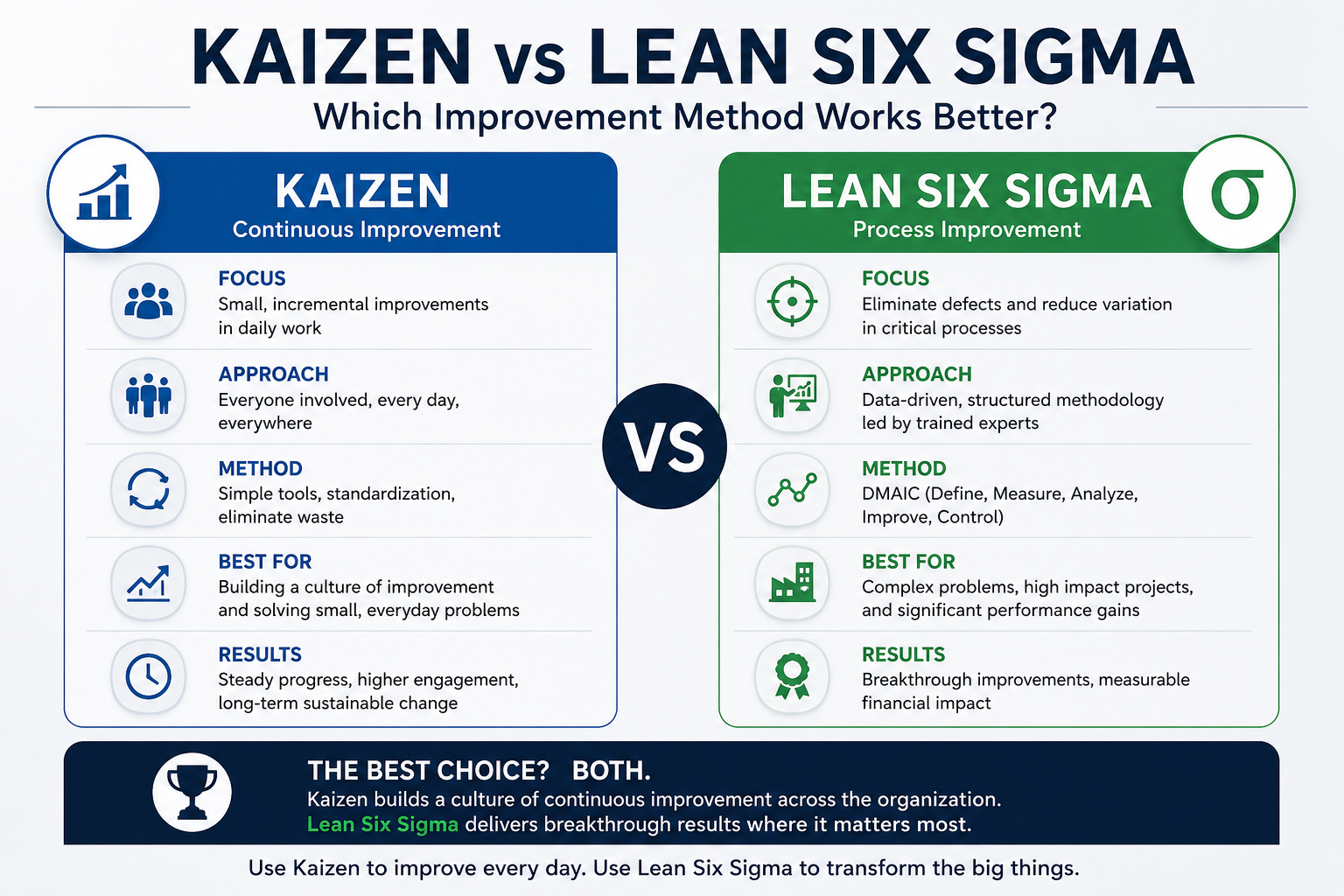
Kaizen promotes a culture of continuous improvement through small, incremental changes, while Lean Six Sigma focuses on significant changes driven by data analysis. If your organization thrives on employee involvement and quick wins, Kaizen may be beneficial. However, if you require a more structured approach with measurable outcomes, Lean Six Sigma may be more appropriate.
Employee Involvement
In Kaizen, all employees are seen as potential contributors to improvement. It fosters a collaborative environment where everyone is invited to share ideas. Lean Six Sigma, while also involving teams, often relies on trained specialists (Black Belts and Green Belts) to lead projects. If you want to empower your entire workforce, Kaizen could be the better choice.
Data Utilization
Lean Six Sigma places a heavy emphasis on data and statistical analysis, making it ideal for environments where numbers drive decisions. Kaizen, on the other hand, is more qualitative, focusing on employee insights and experiences. For organizations with strong data capabilities, Lean Six Sigma may offer more robust tools for process improvement.
Speed of Implementation
Kaizen’s incremental approach often allows for faster implementation of changes, enabling organizations to see quick results. Lean Six Sigma projects may take longer due to their structured nature and data requirements. If your organization needs rapid improvements, Kaizen could be the preferred method.
Which Method Works Better for Indian Organizations?
In the context of Indian businesses, particularly in manufacturing and service sectors, both methodologies hold potential. However, the choice depends on the specific needs of the organization.
If your business culture supports collaboration and encourages every employee to contribute to process improvements, Kaizen could be a great fit. Many Indian companies, especially SMEs, have successfully implemented Kaizen practices to foster a culture of continuous improvement.
On the other hand, if your organization operates in a highly regulated industry, such as pharmaceuticals or aerospace, where quality and compliance are critical, Lean Six Sigma may be the better option. The data-driven approach helps in minimizing defects and ensuring adherence to regulatory standards.
FAQs
1. Can Kaizen and Lean Six Sigma be used together?
Yes, many organizations successfully integrate both methodologies. While Kaizen fosters a culture of continuous improvement, Lean Six Sigma provides the data-driven approach needed for significant changes.
2. What are some examples of Kaizen in Indian companies?
Many Indian manufacturing firms have adopted Kaizen practices, leading to enhancements in productivity, quality, and employee morale. Notable examples include Tata Motors and Mahindra & Mahindra.
3. Is training necessary for implementing Lean Six Sigma?
Yes, training is essential to equip employees with the necessary skills and knowledge to effectively implement Lean Six Sigma methodologies. Organizations often invest in Black Belt and Green Belt training for key personnel.
4. How long does it take to see results from Lean Six Sigma implementation?
The timeline varies depending on the complexity of the project. However, organizations often see improvements within a few months to a year after implementation.
Conclusion
In the debate of kaizen vs lean six sigma, both methodologies offer valuable tools for process improvement. Your choice should depend on your organizational culture, the nature of your industry, and the specific goals you wish to achieve. Whether you lean towards the collaborative spirit of Kaizen or the data-driven approach of Lean Six Sigma, the ultimate goal remains the same: to improve efficiency, reduce waste, and enhance quality.
If you're considering implementing a process improvement method in your organization, reach out to our team of experts today. We can help you evaluate your needs and determine the best approach for your unique situation. Start your journey towards excellence now!