

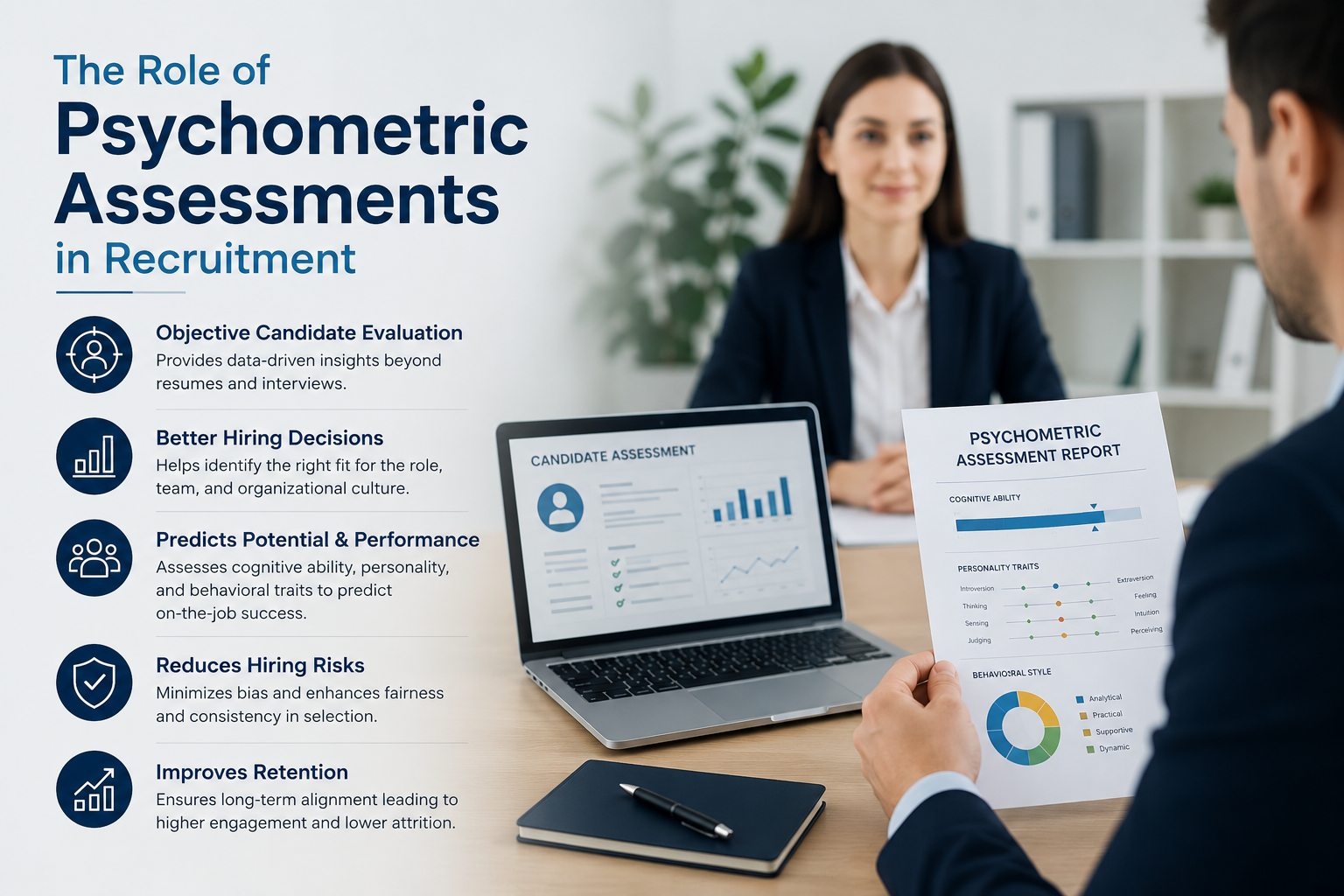

In today’s competitive job market, organizations are constantly seeking innovative ways to enhance their recruitment processes. One such method gaining traction in India is the use of psychometric assessments for hiring. These assessments provide valuable insights into a candidate's personality, cognitive abilities, and behavior, helping employers make informed decisions. In this blog, we will explore what psychometric assessments are, their advantages, and how they play a vital role in recruitment.
Understanding Psychometric Assessments
Psychometric assessments are standardized tools designed to measure various psychological attributes such as personality traits, intelligence, aptitude, and skills. These assessments can be divided into two main categories: personality tests and ability tests. Personality tests assess how candidates behave in different situations, while ability tests evaluate cognitive capabilities and problem-solving skills.
Why Use Psychometric Assessments in Recruitment?
As organizations shift towards data-driven recruitment methodologies, psychometric assessment hiring has emerged as a reliable strategy. Here are some key reasons why these assessments are essential in the recruitment process:
1. Enhances Objectivity
Traditional recruitment methods often rely on subjective evaluations, which can lead to biases and inconsistencies. Psychometric assessments provide a standardized method of evaluation, ensuring that all candidates are assessed based on the same criteria. This objectivity helps to eliminate personal biases and supports fair hiring practices.
2. Predicts Job Performance
One of the primary benefits of psychometric assessments is their ability to predict job performance. By assessing a candidate's cognitive abilities and personality traits, employers can identify individuals who are likely to excel in specific roles. For instance, a candidate with strong analytical skills may be more suited for a data-driven position, while someone with excellent interpersonal skills may thrive in a customer-facing role.
3. Reduces Turnover Rates
Employee turnover can be costly for organizations, both in terms of time and money. By using psychometric assessments during the hiring process, employers can select candidates who are a better fit for the company culture and job requirements. This alignment increases job satisfaction and engagement, ultimately reducing turnover rates.
4. Saves Time and Resources
Recruiting can be a time-consuming process, especially when sifting through numerous applications and conducting multiple interviews. Incorporating psychometric assessments into the hiring process can streamline recruitment by quickly identifying the most suitable candidates. This efficiency allows HR teams to focus on high-potential candidates, saving time and resources.
Types of Psychometric Assessments
There are various types of psychometric assessments that organizations can utilize in their recruitment processes. Here are a few commonly used types:
1. Personality Tests
These tests evaluate traits such as extroversion, emotional stability, openness to experience, agreeableness, and conscientiousness. Popular personality assessment tools include the Myers-Briggs Type Indicator (MBTI) and the Big Five Personality Test.
2. Cognitive Ability Tests
Cognitive assessments measure a candidate's problem-solving skills, critical thinking abilities, and overall intelligence. These tests often include numerical reasoning, verbal reasoning, and abstract reasoning components.
3. Situational Judgment Tests (SJTs)
SJTs present candidates with hypothetical scenarios related to the job role and ask them to choose the most appropriate responses. These tests assess decision-making skills and the ability to handle real-life work situations.
Implementing Psychometric Assessments in Your Recruitment Process
To effectively integrate psychometric assessments into your recruitment strategy, consider the following steps:
1. Define Job Requirements
Clearly outline the skills, abilities, and personality traits required for the position. This will help you select the most relevant psychometric assessments for your hiring needs.
2. Choose the Right Assessment Tools
Select psychometric assessments that are validated and reliable. It's essential to choose tools that have been tested for their effectiveness in predicting job performance in your specific industry.
3. Train Your Recruitment Team
Ensure that your recruitment team is trained in interpreting psychometric assessment results. Understanding how to analyze and apply these insights is crucial for making informed hiring decisions.
4. Communicate with Candidates
Be transparent with candidates about the assessment process. Let them know how the assessments will be used and reassure them that it is just one part of the overall evaluation.
Challenges of Psychometric Assessments
While psychometric assessments offer numerous benefits, there are challenges to consider:
1. Misinterpretation of Results
Without proper training, hiring managers may misinterpret assessment results, leading to poor hiring decisions. It’s essential to ensure that evaluations are only made based on comprehensive analysis.
2. Candidate Anxiety
Some candidates may feel anxious about taking psychometric tests, fearing that their results may negatively impact their chances of being hired. It’s important to create a supportive environment and emphasize that these assessments are just one part of the selection process.
3. Cultural Considerations
Psychometric assessments should be culturally relevant and appropriate for the Indian context. It’s vital to choose assessments that account for cultural differences and language barriers to ensure fair evaluations.
FAQs About Psychometric Assessments in Recruitment
1. What is a psychometric assessment?
A psychometric assessment is a standardized test designed to measure various psychological attributes such as personality traits, cognitive abilities, and skills to evaluate a candidate's suitability for a specific role.
2. How do psychometric assessments benefit employers?
These assessments enhance objectivity, predict job performance, reduce turnover rates, and save time and resources during the recruitment process.
3. Are psychometric assessments reliable?
Yes, when conducted using validated tools, psychometric assessments can provide reliable insights into a candidate's abilities and fit for a role.
4. Can psychometric assessments be used for all job roles?
While they can be beneficial for most positions, it’s essential to choose assessments that are relevant to the specific job requirements and industry.
5. How should organizations implement psychometric assessments?
Organizations should define job requirements, choose appropriate assessment tools, train their recruitment teams, and communicate effectively with candidates about the process.
Conclusion
Incorporating psychometric assessments into your recruitment strategy can significantly enhance your hiring process. These assessments provide valuable insights that go beyond resumes and interviews, enabling organizations to select candidates who are not only qualified but also align with their culture and values. As the Indian job market continues to evolve, embracing innovative recruitment methods such as psychometric assessment hiring will be essential for organizations looking to thrive in a competitive landscape.
If you’re ready to transform your recruitment process and leverage the power of psychometric assessments, contact us today to learn more about our tailored solutions!