About iQS

Empowering learners and educators with a comprehensive platform that bridges the gap between traditional and modern education. iQS inspires excellence in education and fosters growth for a brighter future.

Follow Us

Home Blogs
Pravin sahani
May 29, 2026
Six Sigma Yellow Belt Tools Explained: DMAIC, SIPOC, Pareto & Fishbone Diagram

In today's highly competitive business environment, organizations are constantly striving for operational excellence. One of the most effective methodologies to achieve this is Six Sigma. Among its various levels, the Yellow Belt is an essential stepping stone for anyone looking to understand the basics of this powerful process improvement tool. In this blog, we will explore key Six Sigma Yellow Belt tools, including the DMAIC methodology, SIPOC diagrams, Pareto analysis, and the Fishbone diagram. By the end, you'll have a solid understanding of how these tools can enhance your organization’s efficiency and effectiveness. Understanding Six Sigma and the Role of Yellow Belts Six Sigma is a data-driven approach aimed at reducing defects and improving processes within an organization. It employs various tools and techniques to identify and eliminate root causes of problems. The Yellow Belt level is often the starting point for individuals new to Six Sigma. Yellow Belts are typically team members who assist with process improvement projects and help with data collection and analysis. As a Yellow Belt, having a firm grasp of key Six Sigma tools is crucial for contributing effectively to your team's success. Let’s dive into the specific tools that every Yellow Belt should be familiar with. DMAIC Methodology What is DMAIC? DMAIC stands for Define, Measure, Analyze, Improve, and Control. It is a structured problem-solving methodology widely used in Six Sigma projects. Each phase of DMAIC plays a crucial role in achieving process improvement and operational excellence. 1. Define Phase The first step is to identify the problem and define the project goals. This involves understanding customer requirements and expectations. Tools like project charters and problem statements are often used in this phase. 2. Measure Phase In this phase, you collect data to establish a baseline for current performance. This may involve gathering quantitative and qualitative data. Key performance indicators (KPIs) are defined to measure progress effectively. 3. Analyze Phase The Analyze phase focuses on identifying root causes of the problems identified in the Define phase. Statistical analysis tools, such as control charts and histograms, can help visualize data and uncover patterns. 4. Improve Phase During the Improve phase, potential solutions are developed and tested. This may involve brainstorming sessions and pilot testing to evaluate the effectiveness of proposed changes. 5. Control Phase The final phase of DMAIC involves establishing controls to sustain improvements. This includes creating monitoring systems and standard operating procedures to ensure the changes are maintained over time. SIPOC Diagram What is SIPOC? SIPOC is an acronym for Suppliers, Inputs, Process, Outputs, and Customers. This tool provides a high-level overview of a process and is instrumental in the Define phase of the DMAIC methodology. How to Create a SIPOC Diagram To create a SIPOC diagram, follow these steps: A SIPOC diagram helps teams visualize the entire process and ensures everyone understands their role within it. This tool is particularly useful for Yellow Belts as it simplifies complex processes into manageable components. Pareto Analysis What is Pareto Analysis? Pareto Analysis is based on the Pareto Principle, which states that 80% of effects come from 20% of causes. This tool helps prioritize problems based on their impact, allowing teams to focus their efforts on the most significant issues first. How to Conduct a Pareto Analysis To perform a Pareto analysis: By focusing on these critical problems, Yellow Belts can drive significant improvements in their processes. Fishbone Diagram What is a Fishbone Diagram? Also known as the Ishikawa diagram or cause-and-effect diagram, the Fishbone diagram is a visual tool used to identify and categorize potential causes of a specific problem. It helps teams organize thoughts and brainstorm solutions effectively. How to Create a Fishbone Diagram To create a Fishbone diagram: This tool enhances team collaboration and ensures that all potential root causes are considered before moving forward with solutions. Why Are These Tools Important for Yellow Belts? Understanding and utilizing Six Sigma Yellow Belt tools like DMAIC, SIPOC, Pareto analysis, and the Fishbone diagram can significantly enhance a Yellow Belt’s effectiveness within a team. These tools aid in: By mastering these tools, Yellow Belts can contribute more effectively to their organization’s continuous improvement initiatives. FAQs 1. What is the primary role of a Six Sigma Yellow Belt? The primary role of a Six Sigma Yellow Belt is to support process improvement projects by assisting with data collection, analysis, and implementation of solutions. 2. How long does it take to become a Six Sigma Yellow Belt? The duration to become a Six Sigma Yellow Belt varies, but typically, training programs last between 2 to 5 days, followed by a certification exam. 3. Can I use these tools outside of Six Sigma projects? Yes, Six Sigma tools like DMAIC, SIPOC, Pareto analysis, and the Fishbone diagram can be applied in various fields to enhance process efficiency and problem-solving capabilities. Conclusion Six Sigma Yellow Belt tools such as DMAIC, SIPOC, Pareto analysis, and the Fishbone diagram are indispensable for anyone interested in process improvement. By mastering these tools, you can play a crucial role in enhancing your organization's operational performance. Whether you're just starting your Six Sigma journey or looking to deepen your understanding, these tools will empower you to make data-driven decisions and contribute to a culture of continuous improvement. If you’re ready to take your understanding of Six Sigma to the next level, consider enrolling in a Six Sigma Yellow Belt training program today. Equip yourself with the knowledge to drive impactful change in your organization!

Pravin sahani
May 29, 2026
Six Sigma Yellow Belt vs Green Belt: Which Certification is Right for You?

In today’s competitive job market, having the right skill set can set you apart from the crowd. One of the most sought-after certifications in the realm of process improvement is Six Sigma. However, the Six Sigma certification levels can be confusing, especially when it comes to understanding the differences between the Yellow Belt and Green Belt certifications. In this blog, we’ll explore the key distinctions between the yellow belt vs green belt and help you determine which Six Sigma certification is right for you. What is Six Sigma? Six Sigma is a data-driven methodology that aims to improve business processes by identifying and eliminating defects. The goal is to achieve near perfection in performance, resulting in higher customer satisfaction and lower operational costs. This is achieved through a variety of tools and techniques that are taught at different levels of Six Sigma certification. Understanding Six Sigma Certification Levels Six Sigma certifications are categorized into various belts, similar to martial arts. Each belt represents a different level of expertise and responsibility within the Six Sigma framework. The primary Six Sigma certification levels include: In this blog post, we will focus specifically on the yellow belt vs green belt distinctions. Six Sigma Yellow Belt: An Overview The Yellow Belt is the entry-level certification in Six Sigma. This certification is designed for individuals who are new to the Six Sigma methodology and want to understand the basics of process improvement. Here are some key aspects of the Yellow Belt certification: Who Should Pursue a Yellow Belt Certification? The Yellow Belt certification is ideal for: What You Will Learn as a Yellow Belt As a Yellow Belt, you will learn the following: Six Sigma Green Belt: An Overview The Green Belt certification is a step up from the Yellow Belt. It is designed for professionals who want to take on more responsibility in process improvement initiatives. Here are the key aspects of the Green Belt certification: Who Should Pursue a Green Belt Certification? The Green Belt certification is suitable for: What You Will Learn as a Green Belt As a Green Belt, you will learn the following: Key Differences Between Yellow Belt and Green Belt Now that we have a basic understanding of both certifications, let’s break down the key differences between yellow belt vs green belt: 1. Level of Knowledge and Expertise The Yellow Belt certification focuses on foundational knowledge, while the Green Belt dives deeper into advanced tools and methodologies. If you are looking to just understand Six Sigma, the Yellow Belt is sufficient. However, if you wish to lead projects and implement solutions, the Green Belt is necessary. 2. Roles and Responsibilities Yellow Belts typically support project teams and contribute to process improvement efforts, while Green Belts often lead projects and are responsible for identifying and analyzing problems. If you are looking for a leadership role in Six Sigma projects, the Green Belt is the better option. 3. Course Duration and Depth Yellow Belt training programs usually take around 2-3 days, whereas Green Belt programs can last from 5-10 days, depending on the institution. This time difference reflects the depth of the material covered and the complexity of the skills learned. 4. Career Opportunities While both certifications enhance your resume, having a Green Belt can open more doors. Companies often prefer candidates with Green Belt certification for roles that involve process improvement and project management. Which Certification Should You Choose? Choosing between the Yellow Belt and Green Belt certifications ultimately depends on your career goals and current responsibilities. Here are some questions to ask yourself: If you are just starting your journey in Six Sigma, the Yellow Belt may be the right choice. However, if you have a solid understanding of the fundamentals and wish to take on more significant responsibilities, the Green Belt is an excellent option. FAQs 1. Can I start with a Green Belt certification without a Yellow Belt? Yes, it is possible to pursue a Green Belt certification without having a Yellow Belt. However, it is advisable to have a basic understanding of Six Sigma concepts to make the most of the training. 2. How long does it take to get certified? The duration to get certified varies by institution. Generally, Yellow Belt training takes about 2-3 days, while Green Belt training can take 5-10 days. 3. What are the costs associated with these certifications? The costs can vary significantly based on the training provider. Typically, Yellow Belt certification may range from INR 10,000 to INR 20,000, while Green Belt certification can cost between INR 25,000 and INR 50,000. 4. Is Six Sigma certification recognized in India? Yes, Six Sigma certifications are widely recognized across various industries in India, including manufacturing, healthcare, IT, and finance. They can enhance your career prospects. Conclusion Deciding between the Yellow Belt and Green Belt certifications is an important step in your professional development. By understanding the differences between these two Six Sigma certification levels, you can make an informed choice that aligns with your career goals. Whether you choose to start with a Yellow Belt or leap directly into a Green Belt, both certifications offer valuable skills that can enhance your employability and contribute to your organization’s success. If you're ready to take the next step in your career, explore our Six Sigma certification courses today! Invest in your future and become a valuable asset to your organization. Call to Action Are you ready to enhance your skills and career prospects? Sign up for our Six Sigma Yellow Belt and Green Belt certification courses today! Gain the knowledge and confidence you need to lead process improvement initiatives in your organization.

Pravin sahani
May 29, 2026
What is Six Sigma Yellow Belt Certification? Roles, Benefits & Career Scope

In today’s fast-paced business environment, organizations are constantly striving for efficiency and excellence. One of the methodologies that have gained immense popularity in recent years is Six Sigma. Among the various levels of this methodology, the Six Sigma Yellow Belt Certification stands out as a foundational stepping stone for professionals looking to enhance their skills in process improvement. In this blog, we will delve into what exactly Six Sigma Yellow Belt certification entails, the roles associated with it, its benefits, and the career scope it offers, especially in the Indian context. What is Six Sigma Yellow Belt? The Six Sigma Yellow Belt represents the first level of certification in the Six Sigma hierarchy. It is designed for individuals who want to gain a foundational understanding of Six Sigma principles, tools, and techniques. Yellow Belts typically work on small-scale projects or support project teams led by Green or Black Belts. They play a crucial role in identifying problems and finding solutions by utilizing the Six Sigma methodology. Understanding Six Sigma Methodology Six Sigma is a data-driven approach that aims to eliminate defects and improve processes in organizations. It uses a set of quality management techniques and tools, which are organized into five key phases: Define, Measure, Analyze, Improve, and Control (DMAIC). The Yellow Belt certification provides professionals with the knowledge necessary to participate in and contribute to these projects effectively. Roles and Responsibilities of a Six Sigma Yellow Belt Individuals with a Yellow Belt certification play a supportive yet crucial role in Six Sigma projects. Their primary responsibilities include: Benefits of Six Sigma Yellow Belt Certification Obtaining a Six Sigma Yellow Belt certification comes with numerous benefits that can significantly enhance your career trajectory: 1. Enhanced Skill Set Yellow Belt training equips you with valuable skills in process improvement, data analysis, and project management. These skills are highly sought after in various industries, including manufacturing, healthcare, and IT. 2. Career Advancement Opportunities With a certification in hand, you open doors to various roles within your organization. Many companies prefer to promote employees who have formal training in Six Sigma methodologies, paving the way for career growth. 3. Contribution to Organizational Goals As a Yellow Belt, you play a vital role in helping your organization achieve its quality and efficiency goals. By contributing to process improvements, you not only enhance your skills but also make a measurable impact on your company's success. 4. Networking Opportunities Engaging in Six Sigma training often leads to connections with like-minded professionals and industry experts. This network can be invaluable for future collaborations and career advancements. 5. Increased Earning Potential Certification in Six Sigma can potentially lead to higher salaries. Employers recognize the value of skilled professionals who can drive efficiency and quality, and they are often willing to pay a premium for such expertise. Career Scope of Six Sigma Yellow Belt in India The demand for Six Sigma professionals, including those with a Yellow Belt certification, is on the rise in India. As organizations increasingly focus on quality improvement and operational excellence, the need for skilled professionals who can implement Six Sigma methodologies effectively has grown. Some of the industries that actively seek Six Sigma Yellow Belts include: How to Get Certified as a Six Sigma Yellow Belt? Obtaining a Yellow Belt certification typically involves the following steps: Frequently Asked Questions (FAQs) 1. What is the duration of Six Sigma Yellow Belt training? The duration can vary depending on the provider, but it generally ranges from a few days to a couple of weeks. 2. Is prior experience required to pursue Six Sigma Yellow Belt certification? No prior experience is typically required, making it accessible for beginners who want to start their journey in process improvement. 3. Can I pursue Six Sigma Yellow Belt certification online? Yes, many organizations offer online training and certification, allowing you to study at your own pace. 4. What is the cost of Six Sigma Yellow Belt certification in India? The cost can vary widely depending on the training provider, usually ranging from INR 10,000 to INR 30,000. 5. How long is the Six Sigma Yellow Belt certification valid? Unlike some certifications, Six Sigma Yellow Belt does not typically expire, but it's a good practice to stay updated with additional training and skills. Conclusion In summary, the Six Sigma Yellow Belt certification is an excellent choice for professionals looking to build a solid foundation in process improvement methodologies. With its numerous benefits, including enhanced skills, career advancement opportunities, and increased earning potential, this certification can undoubtedly boost your career in various industries, especially in India. Ready to take the first step towards your Six Sigma journey? Enroll in a Six Sigma Yellow Belt training program today and unlock new opportunities for your career! Call to Action: If you are interested in learning more about Six Sigma Yellow Belt certification or looking for training programs, feel free to contact us or visit our website for more information!

Pravin sahani
May 29, 2026
How to Prepare for Six Sigma White Belt Certification Exam?

The Six Sigma White Belt certification is an excellent starting point for those looking to enhance their skills in process improvement and quality management. This certification not only lays the foundation for further Six Sigma training but also equips individuals with the necessary tools to contribute effectively to their organizations. If you're an aspiring candidate in India, this guide will help you navigate the path to success in your Six Sigma White Belt exam. Understanding Six Sigma Before diving into Six Sigma White Belt preparation, it's essential to understand what Six Sigma is. Developed by Motorola in the 1980s, Six Sigma is a data-driven methodology aimed at eliminating defects and improving processes. The White Belt level is the introductory stage, focusing on basic concepts and terminology. What is the Six Sigma White Belt Certification? The Six Sigma White Belt certification signifies that an individual has a fundamental understanding of Six Sigma principles and practices. This certification is suitable for those who want to gain insights into process improvement without delving too deeply into the statistical aspects of Six Sigma. Benefits of Six Sigma White Belt Certification Steps for Effective Six Sigma Exam Preparation Preparing for the White Belt Certification Exam requires a strategic approach. Here are the steps you should follow to ensure success: 1. Understand the Exam Structure Before you begin your preparation, familiarize yourself with the exam structure. The Six Sigma White Belt exam typically consists of multiple-choice questions covering topics such as: 2. Gather Study Materials Access to quality study materials is vital for effective Six Sigma exam preparation. Consider the following resources: 3. Create a Study Plan Structure your study time effectively. Develop a study plan that includes: 4. Join Study Groups or Forums Consider joining a study group or online forum where you can discuss concepts and share resources with other candidates. Engaging with peers can enhance your understanding and make studying more enjoyable. 5. Focus on Key Concepts While preparing for the white belt certification exam, ensure you focus on the following key concepts: 6. Take Mock Exams Taking mock exams is a crucial part of your preparation. It helps you get accustomed to the exam format and time constraints. Analyze your performance in these tests to identify strengths and weaknesses. Day Before the Exam On the day before your exam, avoid cramming. Instead, take some time to review key concepts lightly and ensure you have all necessary materials ready for the exam day. Get a good night’s sleep to ensure you are well-rested and alert during the exam. On the Exam Day On the exam day, arrive early to avoid any last-minute stress. Bring along any required identification and materials. Stay calm, read each question carefully, and manage your time wisely. FAQs About Six Sigma White Belt Certification 1. What is the passing score for the Six Sigma White Belt exam? The passing score may vary depending on the certifying body, but it is generally around 70%. Check with your specific provider for their requirements. 2. How long is the Six Sigma White Belt certification valid? Most Six Sigma White Belt certifications do not expire, but it is recommended to stay updated with the latest Six Sigma practices through continuous learning. 3. Can I prepare for the exam on my own? Yes, self-study is a viable option. However, using structured courses and engaging with peers can enhance your understanding and retention of the material. Conclusion Preparing for the Six Sigma White Belt exam can be an enriching experience that sets the stage for your career in quality management and process improvement. With the right resources, a solid study plan, and a commitment to understanding the core concepts, you can successfully achieve your certification. Start your journey today and unlock new opportunities in your professional path! Call to Action If you're ready to take the plunge into the world of Six Sigma, start your preparation today! Explore online courses, gather study materials, and connect with other aspiring Six Sigma professionals. Your journey to becoming a certified Six Sigma White Belt begins now!

Pravin sahani
May 28, 2026
Six Sigma White Belt Tools and Concepts Every Beginner Should Learn

In today's fast-paced business environment, organizations are continually seeking ways to improve processes, enhance efficiency, and reduce waste. One of the most effective methodologies for achieving these goals is Six Sigma. For those new to this concept, particularly in India, understanding Six Sigma white belt tools and the fundamental Six Sigma basics is essential. This article will guide you through the key tools and concepts that every beginner should learn in their white belt training. Understanding Six Sigma Six Sigma is a data-driven approach aimed at process improvement and quality management. It focuses on identifying and eliminating defects in any process, whether in manufacturing, service delivery, or administrative functions. By adopting Six Sigma principles, organizations can significantly enhance their productivity and customer satisfaction. What is a White Belt in Six Sigma? A Six Sigma White Belt is the first level of certification in the Six Sigma methodology. White belts gain a basic understanding of Six Sigma principles and tools. They often support project teams in implementing Six Sigma processes and play a crucial role in nurturing a culture of continuous improvement within their organizations. Key Six Sigma Concepts Every White Belt Should Know As a beginner in the Six Sigma journey, it’s important to familiarize yourself with some fundamental concepts: 1. DMAIC The DMAIC framework is a core component of Six Sigma methodology. It stands for: 2. SIPOC Diagram The SIPOC diagram is a high-level tool that captures the essence of a process. It stands for Suppliers, Inputs, Process, Outputs, and Customers. This tool helps in visualizing the key elements of a process and is especially useful during the Define phase of DMAIC. 3. The 5 Whys The 5 Whys technique is a simple yet effective tool for root cause analysis. It involves asking "Why?" five times in succession to peel away the layers of symptoms and reach the underlying cause of a problem. This technique promotes a deeper understanding of issues, enabling teams to address them effectively. 4. Fishbone Diagram Also known as the Ishikawa or cause-and-effect diagram, the Fishbone diagram helps teams visualize the various causes of a problem. By categorizing potential causes into different branches, teams can systematically explore all possible factors contributing to an issue. 5. Control Charts Control charts are graphical tools used to monitor process variability over time. They help teams understand whether a process is in a state of control or if there are variations that need to be addressed. Control charts are crucial in the Control phase of DMAIC. Essential Six Sigma White Belt Tools In addition to the concepts mentioned above, there are several key tools that every Six Sigma White Belt should become familiar with: 1. Pareto Chart A Pareto chart is a bar graph that represents the frequency of problems in descending order. This tool is based on the Pareto principle, which states that roughly 80% of effects come from 20% of the causes. By using a Pareto chart, teams can identify the most significant issues to address, leading to more impactful improvements. 2. Process Mapping Process mapping involves creating a visual representation of a process to understand its flow and identify areas for improvement. This tool is essential for identifying bottlenecks and inefficiencies within a process. 3. Histogram A histogram is a graphical representation of the distribution of numerical data. It helps teams understand the frequency of data points within specific ranges and is useful for identifying trends and patterns in process performance. 4. Scatter Plot A scatter plot displays the relationship between two variables, helping teams identify correlations or patterns. This tool can be instrumental in the Analyze phase of DMAIC, as it aids in understanding potential causes of variation. 5. Brainstorming While not a formal tool, brainstorming is an essential technique for generating ideas and solutions. It encourages team members to share their thoughts freely, fostering a collaborative environment for problem-solving. Importance of White Belt Training White Belt training serves as the foundation for understanding Six Sigma principles and practices. It equips individuals with the knowledge and skills needed to contribute effectively to Six Sigma projects. Moreover, it fosters a culture of continuous improvement, ensuring that every employee is aligned with the organization’s quality goals. Benefits of Six Sigma White Belt Training Frequently Asked Questions (FAQs) 1. What is the difference between a White Belt and a Green Belt in Six Sigma? A White Belt has a basic understanding of Six Sigma concepts and tools, while a Green Belt has a more advanced knowledge and is often responsible for leading projects. Green Belts typically undergo more extensive training and certification. 2. How long does it take to complete Six Sigma White Belt training? White Belt training typically takes a few hours to a couple of days, depending on the training provider. It can be completed online or in-person. 3. Is Six Sigma certification necessary for career advancement? While not mandatory, Six Sigma certification can enhance your employability and career prospects, especially in industries focused on quality management and process improvement. 4. Can I skip the White Belt training and directly pursue a higher certification? While it’s possible to pursue higher certifications like Green or Black Belt, having a solid foundation through White Belt training is beneficial for understanding advanced concepts and tools. 5. Where can I find Six Sigma White Belt training programs in India? Many organizations and online platforms offer Six Sigma White Belt training in India. Look for reputable institutes and platforms that provide certification upon completion. Conclusion Embarking on your Six Sigma journey with a White Belt certification is an excellent step towards mastering process improvement and quality management. By understanding the essential Six Sigma white belt tools and the fundamental Six Sigma basics, you will be well-prepared to contribute to your organization’s success. Whether you’re in manufacturing, services, or any other sector, the knowledge gained from White Belt training is invaluable. Start your journey today and become a vital part of the continuous improvement culture in your organization! Ready to take the first step in your Six Sigma journey? Enroll in a Six Sigma White Belt training program today and unlock the potential for process improvement in your workplace!

Pravin sahani
May 28, 2026
Six Sigma White Belt vs Yellow Belt: Which Certification Should You Choose?

In the world of process improvement and quality management, Six Sigma has established itself as a powerful methodology. With a range of certifications available, it can be challenging to determine which path to take. Among the most fundamental certifications are the Six Sigma White Belt and the Yellow Belt. In this article, we will explore the differences between these two certifications, helping you decide which one aligns with your career goals and aspirations. Understanding Six Sigma Certifications Before diving into the specifics of the White Belt and Yellow Belt, it's essential to understand what Six Sigma is and why these certifications matter. Six Sigma is a disciplined, data-driven approach that aims to eliminate defects in any process, whether in manufacturing, services, or other sectors. The different certification levels signify varying degrees of knowledge and involvement in Six Sigma projects. Six Sigma Certification Levels The hierarchy of Six Sigma certifications includes: Six Sigma White Belt: An Overview The Six Sigma White Belt certification is the starting point for anyone interested in understanding the basics of Six Sigma. This certification is designed for individuals who want a foundational knowledge of the Six Sigma methodology without delving into complex statistical tools. Key Features of the White Belt Certification Six Sigma Yellow Belt: An Overview The Yellow Belt certification builds on the foundational knowledge gained from the White Belt. It is aimed at individuals who are more involved in Six Sigma projects and wish to understand the methodologies and tools used in process improvement. Key Features of the Yellow Belt Certification Six Sigma White Belt vs Yellow Belt: A Comparison Now that we have a clear understanding of both White Belt and Yellow Belt certifications, let’s dive into the Six Sigma White Belt vs Yellow Belt comparison to help you make an informed decision. 1. Knowledge and Skills The White Belt certification offers basic knowledge of Six Sigma concepts, while the Yellow Belt dives deeper into the methodologies and tools used in practical scenarios. If you are looking to simply understand the basic principles, White Belt is sufficient. However, if you want to contribute actively to Six Sigma projects, the Yellow Belt is the better option. 2. Project Involvement White Belts typically have a supportive role and may assist in projects, while Yellow Belts are more involved and can lead smaller projects or work as team members in larger initiatives. If you envision yourself taking an active role in process improvement, consider pursuing the Yellow Belt certification. 3. Career Advancement Both certifications can enhance your resume, but the Yellow Belt carries more weight in terms of career advancement opportunities. Organizations often prefer candidates with a deeper understanding of Six Sigma methodologies, making Yellow Belt holders more attractive for roles in quality management and process improvement. 4. Duration and Cost White Belt training is typically shorter and less expensive, often completed in a day or two. Yellow Belt training requires more time and investment, usually spanning a few days and costing more due to the depth of content covered. Consider your budget and how much time you can dedicate to training when deciding between the two. Which Certification Should You Choose? Your choice between Six Sigma White Belt and Yellow Belt depends on your career goals, current position, and interest in Six Sigma methodologies. If you are new to the field or want a basic understanding, the White Belt certification is an excellent starting point. However, if you aim to be actively involved in process improvement initiatives and wish to enhance your skill set, pursuing the Yellow Belt certification will be more beneficial. FAQs 1. Can I skip the White Belt certification and go directly for the Yellow Belt? Yes, you can directly pursue the Yellow Belt certification. However, having a basic understanding from the White Belt can be helpful. 2. How long is the validity of Six Sigma certifications? Six Sigma certifications do not expire; however, it is advisable to stay updated with the latest methodologies and practices in the field. 3. Which industries value Six Sigma certifications the most? Six Sigma certifications are highly regarded in industries such as manufacturing, healthcare, finance, and IT. Organizations in these sectors often seek professionals with these certifications to enhance their process improvement efforts. 4. Can I pursue further certifications after the Yellow Belt? Absolutely! After obtaining your Yellow Belt, you can progress to the Green Belt certification and beyond, depending on your career aspirations. Conclusion Choosing between Six Sigma White Belt and Yellow Belt certifications is an important decision that can impact your professional journey. Both certifications offer valuable knowledge and skills, but they cater to different levels of involvement in Six Sigma projects. Assess your career objectives and interests carefully to make the best choice. Whether you start with a White Belt or jump to a Yellow Belt, you are taking a significant step toward enhancing your skills in process improvement. Call to Action If you're ready to embark on your Six Sigma journey, explore our comprehensive training programs for both White Belt and Yellow Belt certifications. Equip yourself with the necessary skills to excel in the world of process improvement. Enroll today!

Pravin sahani
May 28, 2026
Benefits of Six Sigma White Belt Certification for Students and Freshers

In today's competitive job market, students and freshers are constantly looking for ways to enhance their skill sets and increase their employability. One of the most effective ways to do this is by obtaining a Six Sigma White Belt Certification. This certification not only provides foundational knowledge of Six Sigma principles but also opens doors to numerous career opportunities. In this article, we will explore the benefits of Six Sigma White Belt Certification for students and freshers, shedding light on why it is a valuable addition to their resumes. What is Six Sigma? Six Sigma is a data-driven methodology focused on process improvement and quality management. It aims to identify and eliminate defects in processes, ultimately enhancing efficiency and productivity. The Six Sigma framework comprises several levels of certification, with the White Belt being the entry-level certification suitable for beginners. This certification equips individuals with an understanding of basic Six Sigma concepts and tools, making it an excellent starting point for students and freshers. Why Should Students and Freshers Consider Six Sigma White Belt Certification? The benefits of Six Sigma White Belt Certification extend beyond just gaining knowledge; it significantly impacts career prospects and personal development. Here are some compelling reasons why students and freshers should consider pursuing this certification: 1. Enhanced Employability In a job market where competition is fierce, having a Six Sigma White Belt Certification can make a candidate stand out. Employers value candidates who possess certifications that demonstrate their commitment to quality and process improvement. By highlighting this certification on their resume, students and freshers can increase their chances of getting noticed by potential employers. 2. Fundamental Knowledge of Quality Management The Six Sigma White Belt Certification provides a solid foundation in quality management principles. Students learn about various tools and methodologies used in Six Sigma, which can be applied across different industries. This knowledge is not only beneficial for those pursuing careers in management or engineering but also for anyone seeking to understand process optimization. 3. Better Problem-Solving Skills One of the core tenets of Six Sigma is its focus on identifying and solving problems effectively. Through the certification process, students and freshers learn how to analyze data, identify root causes of issues, and implement effective solutions. These problem-solving skills are invaluable in any professional setting, enhancing an individual's ability to contribute positively to their organization. 4. Networking Opportunities Obtaining a Six Sigma White Belt Certification often involves joining training programs or workshops where participants can interact with industry professionals and fellow learners. This creates networking opportunities that can lead to internships, job placements, and valuable professional connections. Networking is crucial for freshers looking to enter the job market, and Six Sigma training provides an excellent platform for this. 5. Versatility Across Industries One of the most significant Six Sigma White Belt certification benefits is its applicability across various industries. Whether one aspires to work in manufacturing, healthcare, finance, or IT, the principles of Six Sigma can be implemented in diverse fields. This versatility allows students and freshers to explore different career paths and find their niche. 6. Confidence Boost Achieving a certification can significantly boost an individual's confidence. For students and freshers, the Six Sigma White Belt Certification serves as a tangible recognition of their skills and knowledge. This newfound confidence can positively influence their performance in interviews and professional settings, making them more assertive and effective communicators. 7. Preparation for Advanced Certifications The White Belt Certification is the first step on the Six Sigma journey, and it prepares individuals for more advanced certifications, such as the Yellow Belt or Green Belt. By starting with the White Belt, students and freshers can gradually build their expertise and eventually specialize in areas that align with their career goals. How to Obtain a Six Sigma White Belt Certification Obtaining a Six Sigma White Belt Certification is a straightforward process that involves the following steps: Frequently Asked Questions (FAQs) 1. Is Six Sigma White Belt Certification worth it for freshers? Yes, the Six Sigma White Belt Certification is worth it for freshers as it enhances employability, provides essential knowledge of quality management, and develops problem-solving skills, making them more competitive in the job market. 2. How long does it take to complete the Six Sigma White Belt Certification? The duration to complete the Six Sigma White Belt Certification varies but generally ranges from a few days to a week, depending on the training provider and course structure. 3. Can I pursue advanced Six Sigma certifications after obtaining the White Belt? Absolutely! The Six Sigma White Belt Certification serves as a foundational certification, and you can pursue advanced certifications like Yellow Belt or Green Belt as you gain more experience and knowledge in Six Sigma methodologies. 4. What industries value Six Sigma White Belt Certification? Six Sigma White Belt Certification is valued in various industries, including manufacturing, healthcare, finance, IT, and consulting. Its principles can be applied to improve processes and quality in any sector. Conclusion In conclusion, the benefits of Six Sigma White Belt Certification for students and freshers cannot be overstated. From enhancing employability to developing critical problem-solving skills, this certification serves as a stepping stone for anyone looking to build a successful career. With the growing emphasis on quality management and process improvement across industries, having a Six Sigma certification on your resume can set you apart from the competition. As a student or fresher, investing in your future is crucial. If you're ready to take the next step in your professional journey, consider pursuing a Six Sigma White Belt Certification today! Call to Action Ready to boost your career prospects? Enroll in a Six Sigma White Belt Certification course today and unlock a world of opportunities! Visit our website for more information and start your journey towards becoming a certified Six Sigma professional.

Pravin sahani
May 28, 2026
What is Six Sigma White Belt Certification? Complete Beginner Guide

In today’s competitive business landscape, organizations are always on the lookout for methods to enhance efficiency and improve quality. One of the most recognized methodologies in this regard is Six Sigma. If you're new to this concept, you might be wondering, what is Six Sigma White Belt certification? This comprehensive guide will provide you with all the information you need about Six Sigma White Belt certification, its significance, and how to get started. Understanding Six Sigma Before diving into the specifics of the Six Sigma White Belt certification, let's first understand what Six Sigma itself is. Developed by Motorola in the 1980s, Six Sigma is a set of techniques and tools aimed at process improvement. The primary goal is to identify and eliminate defects in processes, thereby enhancing quality and efficiency. Six Sigma employs a data-driven approach and utilizes various statistical tools to analyze processes. It is widely used across industries, from manufacturing to services, to minimize variation and improve outcomes. The methodology is divided into different levels of certification: White Belt, Yellow Belt, Green Belt, Black Belt, and Master Black Belt, each representing a deeper understanding of Six Sigma principles. What is Six Sigma White Belt Certification? The Six Sigma White Belt certification is the entry-level certification in the Six Sigma hierarchy. It is designed for individuals who want a fundamental understanding of Six Sigma concepts and tools. This certification is particularly beneficial for those who are starting their journey in process improvement, as well as for team members who support project teams within an organization. Who Should Pursue Six Sigma White Belt Certification? The White Belt Six Sigma certification is suitable for: The Benefits of Six Sigma White Belt Certification Obtaining a White Belt Six Sigma certification offers numerous advantages: 1. Foundation in Six Sigma Principles As a White Belt, you will gain a foundational understanding of Six Sigma methodologies, which will help you grasp more complex concepts in the future. 2. Enhanced Problem-Solving Skills The training equips you with basic problem-solving tools that can be applied in real-world scenarios, improving your ability to address workplace challenges. 3. Career Advancement Opportunities Having a Six Sigma certification on your resume can make you a more attractive candidate for job opportunities and promotions, especially in quality management and process improvement roles. 4. Contribution to Organizational Success With your new knowledge, you can contribute to your organization’s goals of reducing waste, enhancing quality, and improving overall efficiency. What Does the Six Sigma White Belt Course Cover? The Six Sigma White Belt course is designed to provide a comprehensive overview of Six Sigma concepts. Typically, the course covers the following topics: How to Get Certified? Getting your Six Sigma White Belt certification is a straightforward process. Here’s how you can do it: 1. Choose a Reputable Training Provider Look for accredited institutions or organizations that offer Six Sigma training programs. Ensure they have a good reputation and positive reviews from past participants. 2. Enroll in the Course Once you’ve found a suitable provider, enroll in their White Belt course. These courses can be conducted in-person or online, providing flexibility based on your schedule. 3. Complete the Training Participate actively in the training sessions, complete any assigned tasks, and engage with instructors and classmates to enhance your understanding. 4. Pass the Certification Exam Many training providers require you to pass a certification exam to earn your White Belt. This exam typically consists of multiple-choice questions covering the material taught in the course. 5. Receive Your Certification Upon passing the exam, you will receive your Six Sigma White Belt certification, which you can proudly showcase on your resume and LinkedIn profile. FAQs About Six Sigma White Belt Certification 1. What is the duration of the Six Sigma White Belt course? The duration of the course varies by provider, typically ranging from a few hours to a couple of days. 2. Is Six Sigma White Belt certification recognized in India? Yes, Six Sigma certifications, including the White Belt, are recognized and respected in various industries across India. 3. Can I pursue higher-level Six Sigma certifications after White Belt? Absolutely! The White Belt certification serves as a foundation for advancing to Yellow Belt, Green Belt, and beyond. 4. What is the cost of Six Sigma White Belt certification? The cost can vary based on the training provider, but it generally ranges from INR 5,000 to INR 15,000 in India. 5. How long is the Six Sigma White Belt certification valid? Six Sigma White Belt certification does not typically expire, but it’s advisable to stay updated with Six Sigma practices and advancements. Conclusion Embarking on your journey with Six Sigma White Belt certification is a smart decision for anyone looking to enhance their career and contribute positively to their organization. With a solid understanding of Six Sigma principles, you can become an integral part of process improvement initiatives in your workplace. If you're ready to take the first step towards mastering Six Sigma, consider enrolling in a Six Sigma White Belt course today. Equip yourself with the skills to make a difference! Call to Action: Want to learn more about Six Sigma and how it can benefit your career? Contact us today to find the right Six Sigma training program for you!

Pravin sahani
May 28, 2026
Lean Six Sigma in Manufacturing & Service Industry: Real Applications and Examples

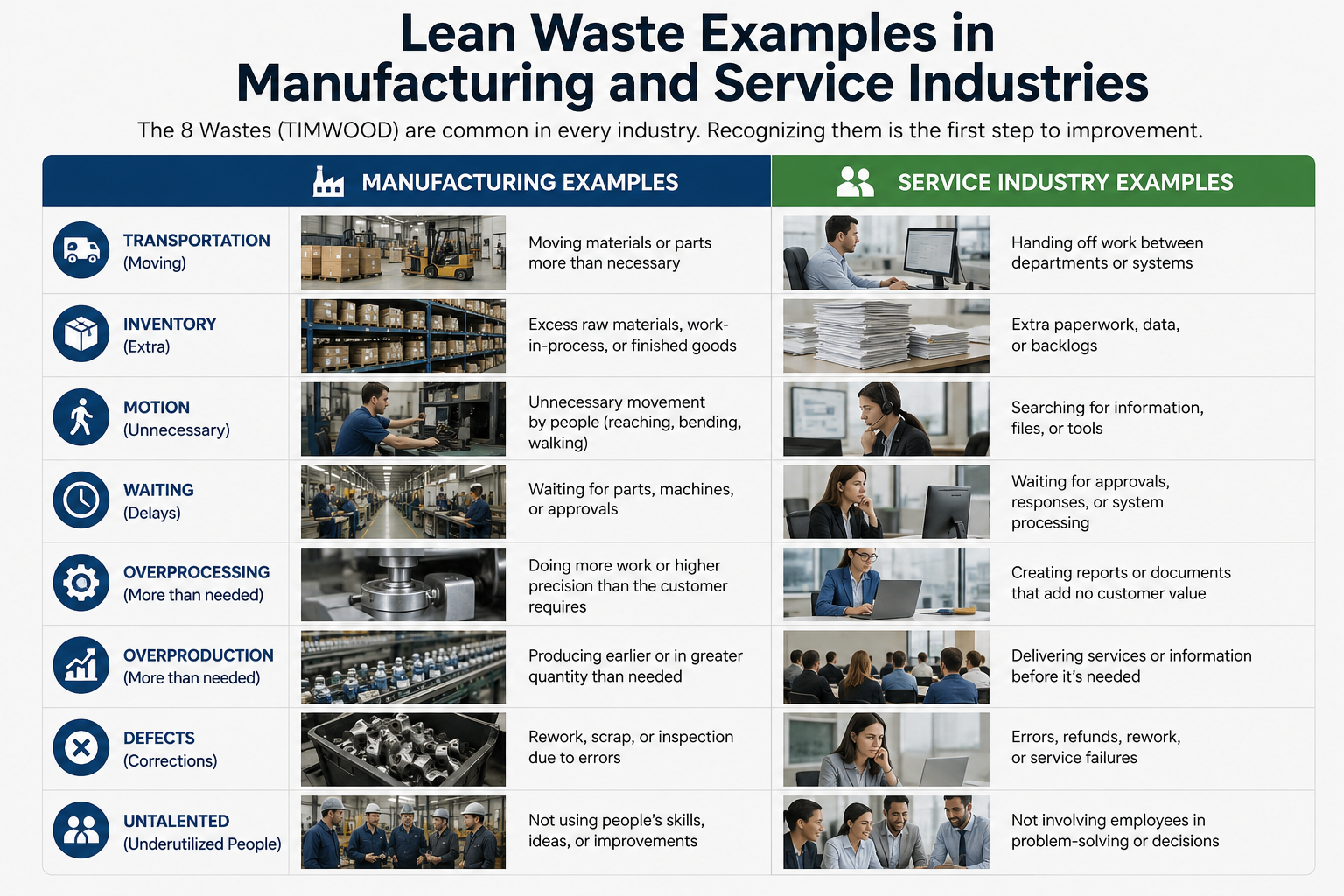
In today's competitive landscape, businesses across India and the globe are constantly seeking methods to enhance efficiency, reduce waste, and improve customer satisfaction. One powerful methodology that has gained traction in both the manufacturing and service sectors is Lean Six Sigma. This article delves into Lean Six Sigma, exploring its real applications, examples, and benefits in the manufacturing and service industries. Understanding Lean Six Sigma Lean Six Sigma is a synergistic approach that combines two powerful methodologies: Lean and Six Sigma. While Lean focuses on eliminating waste and enhancing process flow, Six Sigma emphasizes reducing variability and defects. The integration of these philosophies leads to streamlined operations and improved quality, making Lean Six Sigma a valuable framework for organizations aiming for operational excellence. Why Lean Six Sigma Matters in Manufacturing Manufacturing industries are often under immense pressure to optimize production, reduce costs, and deliver high-quality products. Lean Six Sigma in manufacturing provides the tools and strategies necessary to meet these challenges. By implementing Lean Six Sigma, manufacturers can: Real Applications of Lean Six Sigma in Manufacturing Example 1: Automotive Industry The automotive sector in India has been significantly transformed by Lean Six Sigma. For instance, a prominent Indian car manufacturer implemented Lean Six Sigma principles to optimize its assembly line. By analyzing the production process, the company identified bottlenecks that were causing delays. Through data-driven decision-making, they restructured workstations, reduced cycle time, and ultimately improved throughput by 30%. Example 2: Electronics Manufacturing An electronics manufacturer faced a high defect rate in its product assembly line. By employing Six Sigma tools, they conducted a root cause analysis and discovered that improper handling of components was contributing to defects. Implementing standardized operating procedures and employee training led to a 40% reduction in defects, showcasing a successful Six Sigma implementation. Example 3: Food and Beverage Industry A large food processing company adopted Lean Six Sigma to enhance its production processes. They focused on waste reduction, particularly in inventory management. By applying Lean principles, they minimized excess inventory, improved production scheduling, and reduced lead times. As a result, the company achieved a 25% decrease in inventory holding costs while maintaining product quality. Lean Six Sigma in the Service Industry While Lean Six Sigma is often associated with manufacturing, its principles can be effectively applied to the service industry as well. Service organizations can benefit from improved efficiency, reduced wait times, and enhanced customer satisfaction. Example 1: Healthcare Sector In the healthcare industry, Lean Six Sigma methodologies have been utilized to streamline patient flow and reduce waiting times. A hospital in India implemented Lean Six Sigma to analyze patient admission processes. By mapping the patient journey, they identified delays caused by redundant paperwork and inefficient processes. Streamlining these processes resulted in a 20% reduction in patient waiting times and improved overall patient experience. Example 2: Banking and Financial Services In the banking sector, a leading Indian bank adopted Lean Six Sigma to enhance customer service operations. By applying Six Sigma tools, the bank analyzed customer feedback and service delivery metrics. They discovered that long transaction times were leading to customer dissatisfaction. By re-engineering their service processes and training staff, they achieved a 30% reduction in transaction times, significantly improving customer satisfaction ratings. Implementing Lean Six Sigma: Steps to Success Implementing Lean Six Sigma effectively requires a systematic approach. Here are the key steps to consider: 1. Define Objectives Clearly outline the goals you want to achieve with Lean Six Sigma, whether it's reducing defects, improving efficiency, or enhancing customer satisfaction. 2. Measure Current Performance Utilize data collection methods to assess current performance levels. This includes identifying key performance indicators (KPIs) relevant to your industry. 3. Analyze Data Use statistical tools to analyze the data collected. Identify root causes of issues and areas for improvement. 4. Implement Solutions Develop and implement solutions based on the analysis. This may involve process redesign, employee training, or technology upgrades. 5. Control and Sustain Establish control measures to sustain improvements over time. Regularly monitor performance and make adjustments as necessary. Challenges in Lean Six Sigma Implementation While Lean Six Sigma presents numerous benefits, organizations may face challenges during implementation. Common challenges include: Overcoming these challenges requires effective change management strategies, employee engagement, and ongoing training. FAQs about Lean Six Sigma 1. What is the primary goal of Lean Six Sigma? The primary goal of Lean Six Sigma is to improve operational efficiency by reducing waste and variability, ultimately enhancing product quality and customer satisfaction. 2. Can Lean Six Sigma be applied to small businesses? Yes, Lean Six Sigma can be effectively applied to small businesses. The principles can help streamline operations and improve processes, leading to cost savings and increased competitiveness. 3. How long does it take to see results from Lean Six Sigma implementation? The time frame for seeing results can vary depending on the complexity of the processes being improved. Some organizations may notice improvements within a few months, while others may take longer to achieve significant results. 4. What industries benefit most from Lean Six Sigma? While Lean Six Sigma is widely used in manufacturing, industries such as healthcare, finance, and logistics also benefit greatly from its implementation. Conclusion Lean Six Sigma represents a powerful methodology for organizations in both the manufacturing and service sectors. By focusing on waste reduction, quality improvement, and customer satisfaction, businesses can achieve remarkable results. With numerous real-world applications and examples across various industries, the benefits of Lean Six Sigma are clear. For organizations in India looking to enhance their operations and competitive edge, the adoption of Lean Six Sigma strategies is a step towards operational excellence. If you're ready to take your organization to the next level with Lean Six Sigma, contact us today for expert guidance and support in implementing these powerful methodologies!